
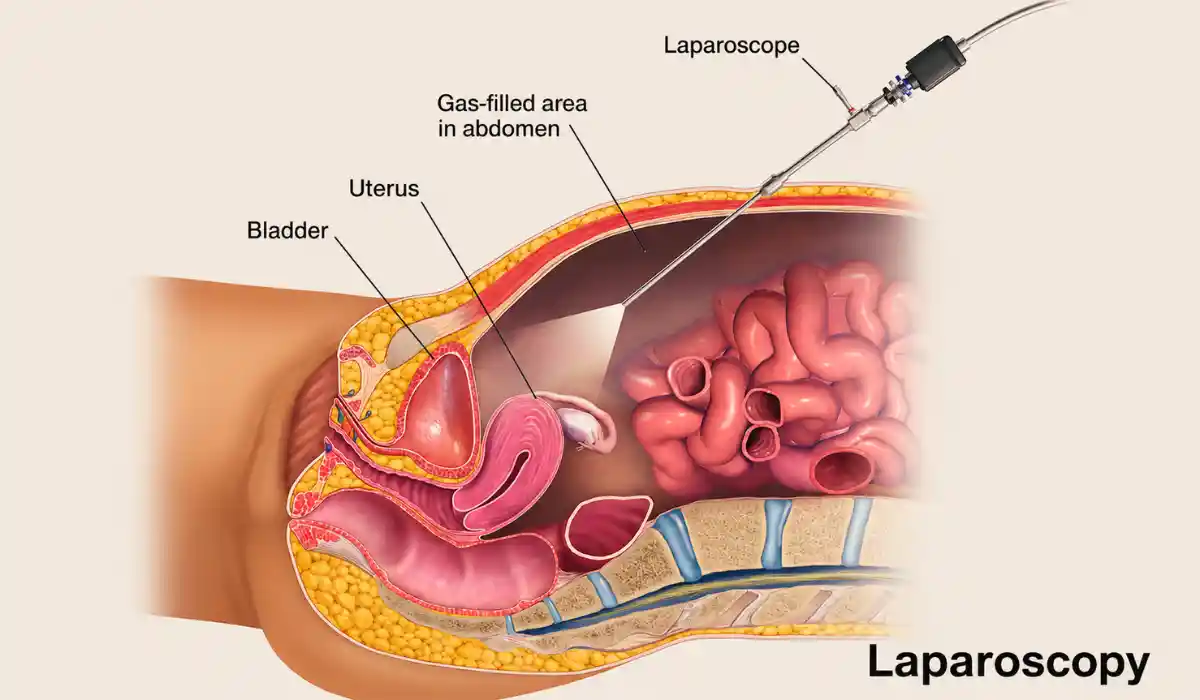
The operation itself takes about one to two hours. However, some procedures take two to four hours when the uterus is large, scar tissue is present, or additional organs must be removed.
The time spent in the operating room is not the same as the total hospital timeline. Anaesthesia, preparation, monitoring, and recovery can add several hours. Your surgeon can give the closest estimate after reviewing your scans, medical history, and planned procedure.
How Long Does The Operation Usually Take?
A straightforward total laparoscopic hysterectomy often lasts around one to two hours. Some hospitals advise patients that surgery may take two to three hours. Complex cases can extend beyond three hours. The difference reflects each patient’s anatomy and the work required during surgery.
A laparoscopic hysterectomy is performed under general anaesthesia. The surgeon makes several small abdominal incisions and fills the abdomen with carbon dioxide gas. A small camera and surgical instruments are then inserted.
The uterus is carefully separated from nearby tissues and usually removed through the vagina. The surgeon closes the internal vaginal opening and the small abdominal incisions with dissolvable stitches, surgical glue, or both.
What Can Make The Surgery Take Longer?
As explained in this Laparoscopic Hysterectomy Guide, the length of surgery depends on the patient’s anatomy and the complexity of the procedure. Several factors can require the surgeon to work more carefully and extend the operating time.
Size of the uterus
Large fibroids or an enlarged uterus can make removal more difficult. The surgeon may need additional time to separate the tissue safely or remove the uterus in smaller sections.
Endometriosis and scar tissue
Advanced endometriosis, previous caesarean sections, abdominal operations, or pelvic infections can cause adhesions. These bands of scar tissue may attach organs together and require careful separation. Complex endometriosis and scar tissue can extend the operation beyond three hours.
Additional procedures
Surgery may take longer when the fallopian tubes, ovaries, cervix, endometriosis lesions, or ovarian cysts are removed during the same operation. Repairing pelvic organ prolapse can also add time.
Your surgeon should explain before surgery which reproductive organs are expected to be removed. However, the final decision can sometimes change because of unexpected findings.
Unexpected surgical findings
Bleeding, unusual anatomy, or concern about the bladder, bowel, or ureters may slow the procedure. The surgeon may pause to examine nearby structures or request help from another specialist.
Rarely, a laparoscopic operation must be changed to an open abdominal hysterectomy. This decision is usually made when continuing through small incisions would not be safe.
How Long Will You Be at the Hospital?
Although the surgery may take only one to three hours, the full hospital visit is much longer. You normally arrive early for registration, consent, medication review, an intravenous line, and preparation for anaesthesia.
After surgery, nurses monitor your breathing, blood pressure, pain, bleeding, and ability to urinate. Some patients go home on the same day or within 24 hours. Others remain in the hospital for one to three days because of nausea, pain, existing medical conditions, or complications.
You will need another adult to drive you home. Someone should normally stay with you during the first 24 hours after a general anaesthetic.
How Long Is Recovery?
Recovery time is different from operating time. Many people return to light daily activities within two to four weeks. However, internal tissues continue healing after your pain and mobility have improved. Most people gradually return toward their previous activity level within four to six weeks.
Tiredness, mild abdominal discomfort, light vaginal bleeding, constipation, and temporary shoulder pain from the surgical gas are common during early recovery. A total or partial hysterectomy may take longer when the surgeon encounters scar tissue, a large uterus, or other pelvic conditions.
Follow your surgeon’s instructions about driving, returning to work, exercise, lifting, sex, tampons, and bathing. Feeling better does not always mean that the internal tissues have completely healed.
Practical Tips for a Safer Recovery
Arrange for an adult to drive you home and stay with you during the first day. Prepare simple meals and place frequently used items where you can reach them without bending or stretching.
Take short walks as advised by your medical team. Early movement supports circulation and helps reduce the risk of blood clots. Increase the distance gradually instead of attempting long walks immediately.
Drink enough fluids and eat fibre-rich foods to reduce constipation. Take prescribed pain medicine correctly and avoid heavy lifting until your surgeon approves it.
Smoking can slow healing and increase the risk of chest or wound complications. Keep your incisions clean and dry, and attend every scheduled follow-up appointment.
When to Seek Professional Help?
Contact your surgical team if pain becomes worse instead of improving. You should also report:
- Fever or chills
- Persistent vomiting
- Difficulty passing urine
- Redness, swelling, or discharge around an incision
- Heavy vaginal bleeding
- Blood clots from the vagina
- Strong-smelling vaginal discharge
- Increasing abdominal pain
Seek urgent medical care for chest pain, sudden shortness of breath, coughing up blood, fainting, or a painful, red, swollen leg. These symptoms can indicate a serious blood clot or another postoperative complication.
Final Thoughts
The operation commonly lasts one to two hours, but a realistic range is one to three hours or longer for complex surgery.
Your total hospital time will also include preparation, anaesthesia, and postoperative monitoring. Ask your surgeon what is planned, whether other organs will be removed, and what factors could change the expected duration. A personalised estimate is more useful than a general average.
FAQs
Yes. Complex endometriosis, a large uterus, scar tissue, additional procedures, or unexpected bleeding can extend surgery to four hours or longer without automatically meaning something went wrong.
Yes. Many uncomplicated laparoscopic hysterectomies take around one to two hours. Your total theatre time will be longer because anaesthesia preparation and early recovery are included.
Some patients leave the hospital on the same day after meeting discharge requirements. Others stay overnight or longer for pain control, nausea, urination problems, or observation.
People with desk-based jobs may return sooner than those doing physical work. Many need two to six weeks, depending on healing, fatigue, complications, and surgeon guidance.
Restrictions vary, but heavy lifting is commonly avoided for several weeks while internal tissues heal. Follow your surgeon’s specific limit rather than judging readiness only by reduced pain.
Timing varies widely. Ask the surgical team for a case-specific estimate because uterus size, adhesions, planned organ removal, and additional procedures can change the duration.