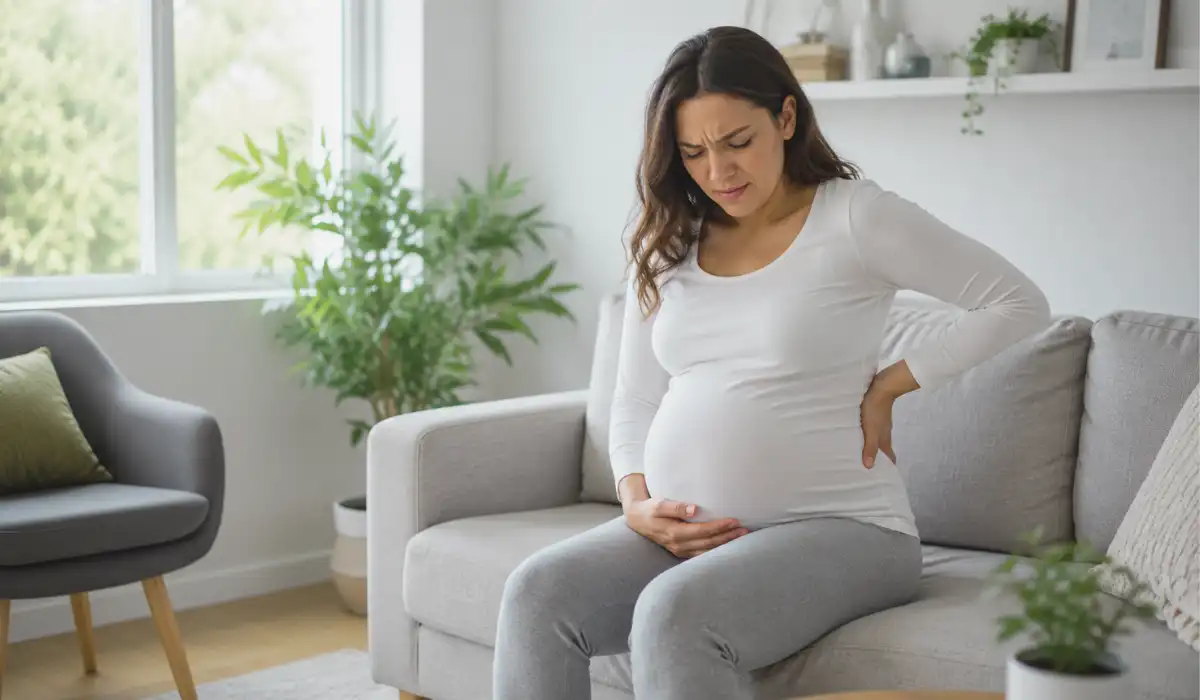
Pelvic pain during pregnancy typically comes from relaxin loosening your joints and ligaments stretching to accommodate your growing baby, and for most women it’s an uncomfortable but harmless part of the third trimester rather than a warning sign.
That said, knowing which pains are routine and which ones need a phone call matters. Below is the practical version: what causes the ache, how it feels by stage, what you can actually do at home, and the red flags worth acting on fast.
What Causes Pelvic Pain During Pregnancy?
Blame chemistry, mostly. Early on, your body releases the relaxin hormone, which softens ligaments and joints so the pelvis can widen for delivery. That relaxin hormone and ligament laxity is helpful for birth but rough on stability, so joints that used to hold firm now shift and ache.
Add the mechanical load. Growing uterus pressure presses on nerves, the bladder, and the pelvic floor, and by the third trimester your center of gravity has moved forward enough to strain everything below the waist. So the pain isn’t one thing. It’s ligaments stretching, joints loosening, and weight redistributing all at once.
Round Ligament Pain
The round ligaments run from the uterus down into the groin. As the uterus grows, they stretch, and when you move quickly, they can twinge hard.
Round ligament pain is that sharp or jabbing sensation, usually on one side, that hits when you cough, sneeze, roll over, or stand up too fast. It’s most common in the second trimester. The pain is brief, seconds not minutes, and eases when you stop moving. Round ligament pain is one of the most reported complaints between weeks 14 and 24, and it’s harmless despite feeling dramatic.
If a jab lasts and lingers, or comes with bleeding, that’s a different story. Plain round ligament pain does not.
Pelvic Girdle Pain and Symphysis Pubis Dysfunction
Pelvic girdle pain is broader and deeper than a ligament twinge. It’s a persistent ache across the front of the pubic bone, the lower back, or the buttocks, and it tends to build over weeks rather than flash and fade.
When it centers on the joint at the front of your pelvis, clinicians call it symphysis pubis dysfunction. Symphysis pubis dysfunction happens when that joint loosens unevenly and the two halves of the pelvis move out of sync. The tells are specific: pain climbing stairs, pain standing on one leg to pull on trousers, and a grinding feeling when you part your knees. Some people describe an audible click.
Pelvic girdle pain affects a meaningful share of pregnancies, and while symphysis pubis dysfunction sounds frightening, it’s manageable. This is where pelvic physical therapy earns its keep, which I’ll get to below.
Urinary Tract Infections and Other Warning Signs
Not all pelvic pain is musculoskeletal. A urinary tract infection can cause low pelvic pressure, burning when you pee, and a constant urge to go. Pregnancy makes a urinary tract infection more likely because relaxed ureters slow urine flow, and an untreated UTI can climb to the kidneys, so it’s worth a same-day test rather than waiting it out.
Then there are the mimics. Braxton Hicks contractions tighten the whole belly and can feel like pelvic cramping; they’re irregular, painless-to-mild, and stop when you change position. Real labor contractions get closer together and stronger. If you can’t tell the difference, timing them for an hour usually reveals which you’re dealing with.
Pelvic Pain by Trimester
Is pelvic pain in early pregnancy normal? Often, yes. During the first few weeks, mild cramping and pressure can occur as the uterus grows and surrounding ligaments begin to stretch. Pelvic pain may feel like a dull ache, sharp jab, heaviness, or a bruised sensation near the pubic bone.
A healthcare provider may recommend a pelvic exam during pregnancy if the pain is persistent, severe, or accompanied by bleeding, unusual discharge, fever, or urinary symptoms. The examination can help identify possible causes and rule out complications.
Pelvic pain in the second trimester is often linked to round ligament pain triggered by movement, along with early signs of pelvic girdle pain. By the third trimester, pressure from the growing uterus and increased joint looseness may make walking, climbing stairs, or standing on one leg genuinely painful.
At-Home Relief and Self-Care
Small changes do more than you’d expect for pregnancy pelvic pain relief.
- Keep your knees together getting in and out of the car, and use the rolling in bed technique: roll onto your side as one unit, then push up with your arms instead of twisting.
- Sit down to dress so you’re not balancing on one leg.
- A warm compress on the lower back, a pregnancy pillow between the knees at night, and a supportive belt for the pelvis all help.
- Short walks and gentle pelvic tilts keep things mobile without overloading the joints.
The single best investment is pelvic physical therapy. A therapist trained in pregnancy will assess the joint, teach targeted stability exercises, and often fit a support belt.
When to Call Your Doctor?
Call your provider if the pain is severe, steady, or getting worse, if walking becomes hard, or if you have burning urination or a fever pointing to a UTI. Pelvic physical therapy referrals usually come from this conversation, so don’t tough it out silently.
Persistent pelvic heaviness or aching that worsens after prolonged standing may also require evaluation for less common conditions, such as pelvic congestion syndrome, which involves enlarged veins in the pelvic area.
When to worry about pelvic pain pregnancy comes down to what travels with it. Pain plus vaginal bleeding, pain plus fever, or regular tightening before 37 weeks all warrant a same-day call.
When to Seek Emergency Care?
Some symptoms don’t wait. Sharp, one-sided pelvic pain with vaginal bleeding in the first trimester can signal an ectopic pregnancy, where the embryo implants outside the uterus, and that is a medical emergency. Can pelvic pain be a sign of miscarriage? It can, particularly cramping paired with bleeding, though many bleeds resolve fine.
Get emergency care for heavy bleeding, fainting, severe one-sided pain, shoulder-tip pain, or any suspicion of ectopic pregnancy.
Conclusion
Most pelvic pain during pregnancy is your body doing exactly what it’s built to do, loosening and shifting for birth. Simple positioning tricks and pelvic physical therapy handle the bulk of it.
Trust the pattern, treat the ache, and keep the red flags, bleeding, fever, and severe one-sided pain, on your radar so you know when a symptom has crossed from normal into something a clinician should see.
FAQs
Pelvic pain can be normal as joints, ligaments, and muscles adapt during pregnancy. Severe, worsening, one-sided pain or discomfort accompanied by bleeding needs medical assessment.
Round ligament pain usually feels like a brief, sharp jab in the lower abdomen or groin, often triggered by coughing, standing, rolling over, or sudden movement.
Pelvic girdle pain may begin at any stage, although it becomes more common later in pregnancy as body weight, posture, and pressure across the pelvis change.
Rest, slower movements, supportive pillows, suitable exercises, and a pelvic support belt may help. Ask your maternity clinician before starting any new treatment or exercise routine.
Call your clinician promptly today for pain with vaginal bleeding, fever, painful urination, fluid leakage, regular contractions, increasing pelvic pressure, faintness, or difficulty walking normally.
Pelvic pain alone does not confirm miscarriage. However, cramping with vaginal bleeding, fluid loss, passing tissue, dizziness, or worsening pain should be assessed by a healthcare professional.
References
- Mayo Clinic – Pelvic Exam (Mayo Clinic)