
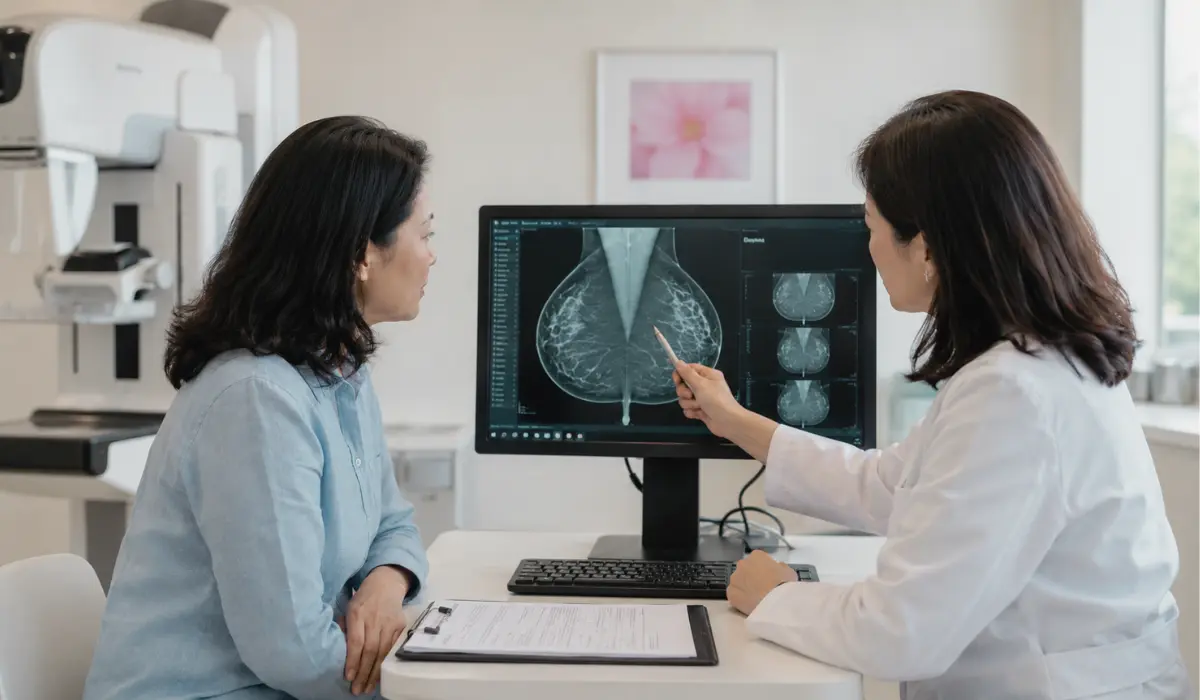
Most breast biopsies do not show cancer. In general, about 1 out of 5 breast biopsies, or around 20%, may find cancer. The other 80% are usually benign, meaning the tissue sample does not contain cancer cells.
A doctor may recommend a biopsy when a mammogram, ultrasound, MRI, or breast exam shows something unusual. The test helps confirm whether the breast change is cancerous or noncancerous.
So, when people ask what percentage of breast biopsies are cancer, the answer is usually about 20%, but the exact risk depends on the person’s age, imaging results, symptoms, and medical history.
Why Are Breast Biopsies Done?
A breast biopsy is usually done when a mammogram, ultrasound, MRI, or physical breast exam shows an area of concern. This may include a lump, unusual calcifications, breast thickening, nipple changes, or an abnormal area seen on imaging.
Imaging tests can show that something looks suspicious, but they cannot confirm cancer on their own. During a biopsy, a small sample of breast tissue is removed and checked under a microscope by a pathologist. The result helps doctors know whether the tissue is benign, precancerous, or cancerous.
Most Breast Biopsies Are Not Cancer
The most important thing to understand is that most breast biopsies come back benign. A benign result means cancer cells were not found in the tissue sample.
Benign breast conditions are common. These may include cysts, fibroadenomas, fibrocystic changes, inflammation, scar-like tissue, or other noncancerous breast changes. Some of these conditions may still need follow-up, but they are not the same as breast cancer.
This is why doctors recommend biopsy carefully. They want to avoid missing cancer, but they also know many suspicious-looking findings are harmless.
Why The Percentage Can Vary?
The overall cancer rate from breast biopsies is often around 20%, but the exact number is not the same for everyone. Some people have a lower chance, while others have a higher chance based on their test results and risk factors.
The percentage may be higher when the imaging report shows a very suspicious mass, irregular borders, or certain patterns of calcifications. It may be lower when the finding looks only mildly suspicious.
Doctors often use BI-RADS categories to describe breast imaging results. For example, BI-RADS category 4 means the finding is suspicious and biopsy may be recommended. Category 4 can range widely, from low suspicion to high suspicion. BI-RADS 4A may have a lower chance of cancer, while BI-RADS 4C carries a much higher chance.
What Happens If The Biopsy Is Benign?
If the biopsy is benign, the next step depends on the type of finding. Some people may only need routine screening. Others may need a follow-up mammogram or ultrasound in a few months to make sure the area stays stable.
A benign result can be a relief, but it is still important to follow the doctor’s advice. Sometimes, doctors compare the biopsy result with the imaging findings to make sure they match. This is called radiology-pathology correlation.
If the result and imaging do not match, the doctor may suggest another biopsy or surgical removal of the area. This does not always mean cancer, but it helps prevent missed diagnoses.
What If The Biopsy Shows Cancer?
If cancer is found, the biopsy report gives important details. It may show the type of breast cancer, grade, hormone receptor status, HER2 status, and other features. These details help guide treatment.
A positive biopsy does not mean treatment starts blindly. Doctors usually order more tests, review the cancer type, and create a treatment plan based on the person’s overall health and the stage of disease. If the cancer is more complex or has spread, the care team may also discuss advanced breast cancer treatment options.
Some breast cancers are found early through imaging before they cause symptoms. Early detection can improve treatment options and outcomes.
Can A Breast Biopsy Show Precancerous Changes?
Yes. Sometimes a biopsy does not show invasive cancer but does show abnormal or high-risk cells. These may include atypical ductal hyperplasia, atypical lobular hyperplasia, lobular carcinoma in situ, or ductal carcinoma in situ.
Some of these findings are not invasive breast cancer, but they may increase future breast cancer risk or need treatment. The doctor may recommend closer monitoring, medication, or surgery depending on the result.
Types Of Breast Biopsies
There are several types of breast biopsies. The right type depends on the location, size, and appearance of the suspicious area.
A core needle biopsy is one of the most common types. It uses a hollow needle to remove small tissue samples. A fine needle aspiration may be used for fluid-filled lumps or certain simple cases. A stereotactic biopsy uses mammogram guidance, while an ultrasound-guided biopsy uses ultrasound imaging. MRI-guided biopsy may be used when the abnormal area is best seen on MRI.
In some cases, a surgical biopsy may be needed. However, many breast biopsies today are done with needle techniques because they are less invasive and usually allow faster recovery.
Common Feelings While Waiting For Results
Waiting for biopsy results can be stressful. It is normal to feel anxious, scared, or unable to focus. However, the statistics can provide some reassurance: most breast biopsies do not show cancer.
Results may take a few days or longer depending on the lab, the type of biopsy, and whether extra testing is needed. Patients should ask their healthcare team when to expect results and how they will be shared.
When To Call A Doctor After A Biopsy?
Mild bruising, soreness, and swelling can happen after a breast biopsy. These usually improve with time. However, a person should contact a doctor if they develop heavy bleeding, increasing redness, worsening pain, fever, pus, or swelling that keeps getting worse.
It is also important to call the healthcare team if biopsy results are delayed longer than expected or if the report is confusing. Patients have the right to ask what the result means and what the next step should be.
Final Verdict
So, In many cases, about 1 in 5 breast biopsies show cancer, while most show benign breast changes. A biopsy can feel frightening, but it is a valuable test that gives clear answers when imaging or symptoms raise concern.
The best next step is to follow the recommended testing plan, ask questions, and review the biopsy result with a qualified healthcare professional. Whether the result is benign, high-risk, or cancerous, knowing the answer helps doctors choose the safest and most appropriate care.
FAQs
1. What percentage of breast biopsies are cancer?
About 20% of breast biopsies show cancer, while around 80% are benign. The exact percentage can vary based on age, imaging results, symptoms, and personal risk factors.
2. Does needing a breast biopsy mean I have cancer?
No. A breast biopsy means a doctor found something that needs closer testing. Most breast biopsies do not show cancer, but biopsy is the best way to confirm the diagnosis.
3. What does a benign breast biopsy mean?
A benign breast biopsy means cancer cells were not found in the tissue sample. Benign results may include cysts, fibroadenomas, fibrocystic changes, or other noncancerous breast conditions.
4. How long does it take to get breast biopsy results?
Breast biopsy results usually take a few days, but timing can vary by lab and test type. Some results may take longer if extra testing is needed.
5. What happens if a breast biopsy shows cancer?
If cancer is found, doctors review the type, grade, hormone receptor status, HER2 status, and stage. These details help guide the best treatment plan for the patient.
6. Can a breast biopsy miss cancer?
A breast biopsy is very accurate, but no test is perfect. If imaging findings and biopsy results do not match, the doctor may recommend repeat biopsy, surgery, or closer follow-up.
References
Cleveland Clinic
Breast Biopsy: Types, Procedure, Recovery & Results
https://my.clevelandclinic.org/health/diagnostics/24204-breast-biopsy-overview
American Cancer Society
Biopsy Procedure for Breast Cancer
https://www.cancer.org/cancer/types/breast-cancer/screening-tests-and-early-detection/breast-biopsy.html
Mayo Clinic
Breast Biopsy
https://www.mayoclinic.org/tests-procedures/breast-biopsy/about/pac-20384812