
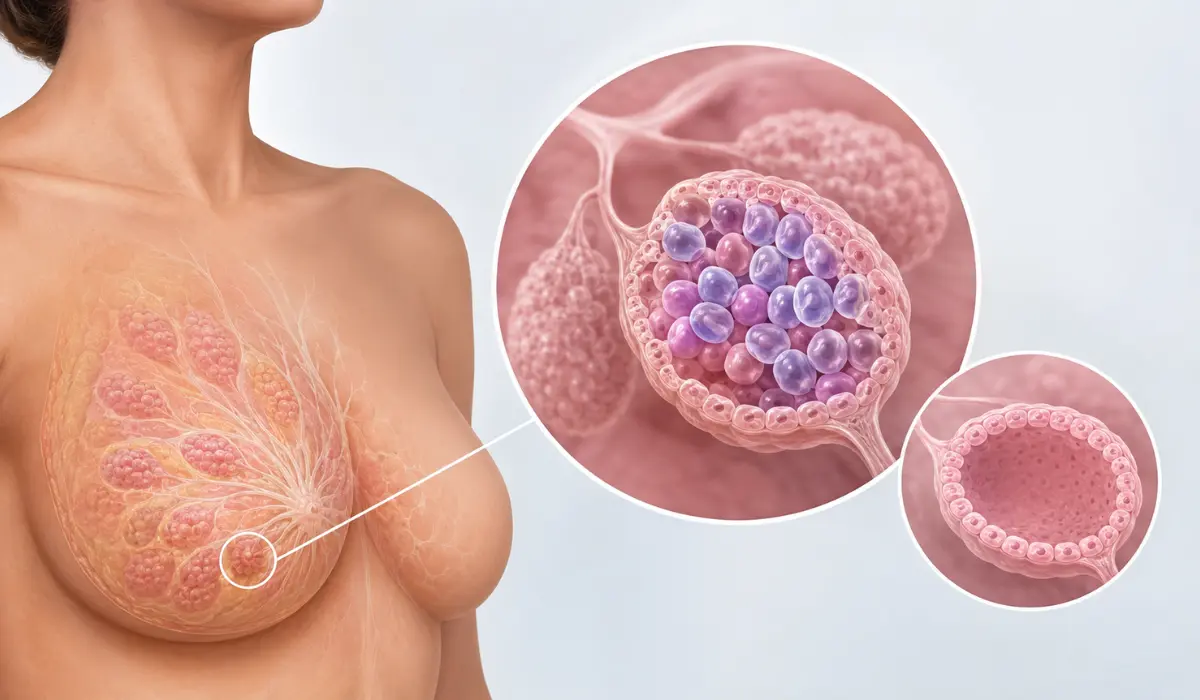
LCIS breast cancer stands for lobular carcinoma in situ. It is a breast condition where abnormal cells are found inside the lobules, which are the milk-producing glands of the breast. Even though the name includes the word “carcinoma,” LCIS is not usually considered true breast cancer because the abnormal cells have not spread outside the lobules.
LCIS is often described as a risk marker rather than an active cancer. This means it does not usually form a lump or spread like invasive breast cancer, but it can increase the chance of developing breast cancer in either breast later in life.
Many people are diagnosed with LCIS after a breast biopsy done for another reason, such as an abnormal mammogram or breast imaging result. Because LCIS often causes no symptoms, regular screening and follow-up care are important.
What Does LCIS Mean?
The term “in situ” means “in its original place.” In LCIS, abnormal cells stay inside the breast lobules and do not invade nearby breast tissue. This is different from invasive breast cancer, where cancer cells break through normal tissue boundaries and can spread.
LCIS is not the same as a breast lump or tumor in many cases. It may be found only under a microscope after tissue is removed during a biopsy. For this reason, LCIS is often discovered unexpectedly.
Doctors may use LCIS as a sign that a person has a higher-than-average risk of developing breast cancer in the future.
Is LCIS Actually Breast Cancer?
LCIS is not usually treated as active breast cancer. It is considered a non-invasive breast condition. However, it is still important because it shows that the breast tissue has abnormal cell changes.
Having LCIS does not mean someone currently has invasive breast cancer. It also does not mean breast cancer will definitely happen. Many people with LCIS never develop breast cancer.
However, LCIS does increase the risk, so doctors often recommend closer monitoring, regular breast exams, and sometimes preventive treatment depending on the person’s overall risk.
Symptoms Of LCIS Breast Cancer
LCIS usually does not cause symptoms. Most people do not feel a lump, pain, swelling, or nipple changes because of LCIS alone.
It is often found during testing for another breast concern. For example, a mammogram may show calcifications or another change, and a biopsy may then reveal LCIS.
Even though LCIS itself may not cause symptoms, any new breast change should be checked by a healthcare provider. This includes a lump, nipple discharge, skin dimpling, breast swelling, redness, or nipple turning inward.
What Causes LCIS?
The exact cause of LCIS is not always clear. It happens when cells inside the breast lobules begin to grow in an abnormal pattern.
Several factors may affect breast cancer risk, including age, family history, genetics, hormone exposure, breast density, and personal history of breast conditions. However, LCIS can also appear in people without a strong family history.
A diagnosis of LCIS does not mean the person did anything wrong. It is a cellular change that usually needs careful follow-up rather than immediate aggressive treatment.
How Is LCIS Diagnosed?
LCIS is usually diagnosed through a breast biopsy. A biopsy removes a small sample of breast tissue so a pathologist can examine it under a microscope.
Imaging tests like mammograms, ultrasound, or breast MRI may help doctors decide where to biopsy, but LCIS itself is often not clearly visible on imaging.
After diagnosis, the doctor may review the biopsy results, breast imaging, family history, and personal risk factors to decide the best follow-up plan.
Types Of LCIS
Classic LCIS
Classic LCIS is the most common type. It usually grows slowly and is often managed with close observation, regular screening, and risk-reduction strategies.
Pleomorphic LCIS
Pleomorphic LCIS has cells that look more abnormal under the microscope. It may be treated more carefully because it can behave differently from classic LCIS.
Florid LCIS
Florid LCIS means the abnormal cells fill and expand the lobules more noticeably. Doctors may recommend additional treatment depending on the biopsy findings and imaging results.
LCIS vs DCIS
LCIS and DCIS are both non-invasive breast conditions, but they are not the same.
LCIS starts in the lobules, while DCIS starts in the milk ducts. DCIS is more often considered stage 0 breast cancer because it may become invasive if untreated. LCIS is usually seen more as a risk marker for future breast cancer.
This difference matters because treatment plans for LCIS and DCIS can be very different.
Treatment Options For LCIS
Treatment for LCIS depends on the type of LCIS, biopsy results, personal risk level, and family history.
For classic LCIS, many doctors recommend active monitoring instead of immediate surgery. This may include regular clinical breast exams, yearly mammograms, and sometimes breast MRI for people at higher risk.
Some people may be offered risk-reducing medications. These medicines may help lower the chance of developing hormone-sensitive breast cancer in the future.
Surgery is not always needed for classic LCIS. However, if the LCIS is pleomorphic, florid, or found near another concerning area, doctors may recommend removing more tissue to make sure no invasive cancer is present.
Can LCIS Turn Into Invasive Breast Cancer?
LCIS itself does not commonly turn directly into invasive cancer. However, people with LCIS have a higher risk of developing breast cancer later.
The future cancer may develop in either breast, not only in the breast where LCIS was found. This is why follow-up care often focuses on both breasts.
The main goal after an LCIS diagnosis is early detection and risk reduction.
Living With LCIS
Being diagnosed with LCIS can feel stressful, especially because the name sounds like cancer. However, LCIS is usually not an emergency diagnosis.
Most people with LCIS work with their doctor to create a long-term monitoring plan. This may include regular imaging, lifestyle changes, and risk discussions.
Healthy habits may also support overall breast health. These include maintaining a healthy weight, staying physically active, limiting alcohol, avoiding smoking, and following recommended screening schedules.
When To See A Doctor?
See a healthcare provider if you notice any new breast change, even if you already have a follow-up plan for LCIS.
Warning signs may include a new lump, nipple discharge, breast pain that does not go away, skin thickening, swelling, redness, or changes in breast shape.
You should also speak with a doctor if you have a strong family history of breast cancer, ovarian cancer, or known genetic mutations. Genetic counseling may be helpful for some people.
Final Verdict
LCIS breast cancer is a term used for abnormal cells found inside the breast lobules. Although it is not usually considered invasive breast cancer, it is important because it increases future breast cancer risk.
A diagnosis of LCIS does not mean breast cancer is already present or guaranteed to happen. With regular follow-up, breast screening, and proper medical guidance, many people with LCIS manage their risk effectively.
Medical Disclaimer: This article is for general information only and should not replace professional medical advice, diagnosis, or treatment. Always speak with a qualified healthcare provider about breast symptoms, biopsy results, or personal cancer risk.
FAQs
1. Is LCIS breast cancer dangerous?
LCIS is usually not dangerous like invasive breast cancer, but it is important because it increases the risk of developing breast cancer later.
2. Does LCIS need chemotherapy?
No, LCIS usually does not need chemotherapy because it is not invasive cancer. Treatment often focuses on monitoring and reducing future breast cancer risk.
3. Can LCIS spread to other parts of the body?
Classic LCIS does not spread because the abnormal cells stay inside the breast lobules. However, it can signal higher future breast cancer risk.
4. How is LCIS usually found?
LCIS is usually found during a breast biopsy done for another reason, such as an abnormal mammogram or suspicious breast imaging result.
5. Can someone with LCIS live a normal life?
Yes, many people with LCIS live normal lives. Regular breast screening, follow-up visits, and risk management help monitor breast health over time.
References
National Cancer Institute
LCIS
https://www.cancer.gov/publications/dictionaries/cancer-terms/def/lcis
American Cancer Society
Lobular Carcinoma in Situ
https://www.cancer.org/cancer/types/breast-cancer/non-cancerous-breast-conditions/lobular-carcinoma-in-situ.html
Mayo Clinic
Lobular Carcinoma in Situ – Symptoms and Causes
https://www.mayoclinic.org/diseases-conditions/lobular-carcinoma-in-situ/symptoms-causes/syc-20374529