
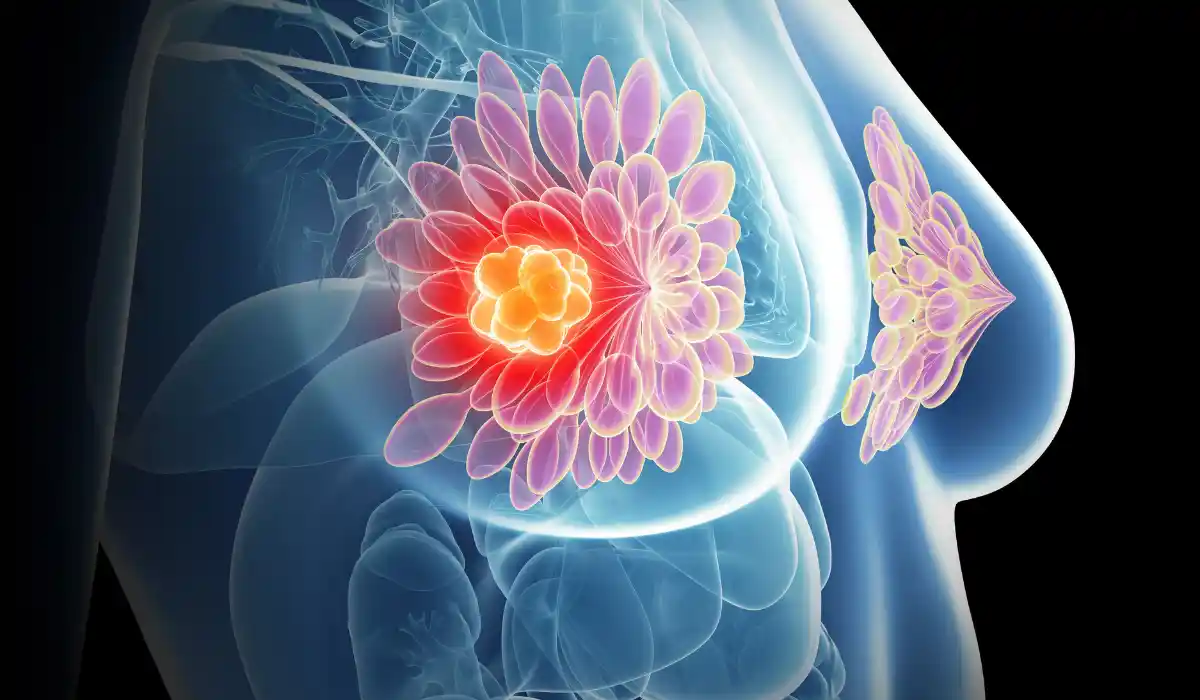
Breast cancer occurs when the cells in the breast grow and divide abnormally. But in the early stages, it is highly curable with treatments that typically involve a combination of local therapies, such as surgery or radiation to remove the tumor, and systemic therapies, such as chemotherapy, hormone therapy, or targeted therapy to remove any remaining cancer cells.
Early Breast Cancer: Types of Treatments
Based on the size, there are two types of tumors in the early stage.
- Stage 1A – When the tumor is only 2 centimeters or smaller and has not spread through the lymph nodes.
- Stage 1B – When cancer cells are found in at least one lymph node as a cluster with 0.2 mm to 2.0 mm in size. A small cancerous tumor with 2 centimeters or smaller in size may or may not be found in the breast along with this.
The treatments for early-stage breast cancer, including invasive ductal carcinoma and invasive lobular carcinoma, are a combination of the neoadjuvant therapy, or the treatment before surgery, surgery, radiation, and adjuvant/systemic therapy, or the treatment after surgery.
Surgery and Radiation Therapy
In the early breast cancer treatment, surgery is the primary or foundational step. It can sometimes involve a lumpectomy, which is the breast-conserving surgery that removes only the cancerous tumor along with a small amount of surrounding healthy tissue. In some cases, a mastectomy is performed to remove the entire breast tissue.
In both types of surgery, a sentinel lymph node biopsy will be performed, and some axillary lymph nodes (lymph nodes in the underarm area) may be removed to check whether they contain cancer cells.
Radiation therapy is usually performed on patients who have undergone a lumpectomy to eliminate any potential residue of cancer cells in the breast. This helps to lower the chances of breast cancer recurrence or a return of the breast cancer. Sometimes radiation is also given to the axillary lymph nodes to kill any potential cancer cells that may remain there.
For patients who have undergone a mastectomy, radiation is not necessary unless there are cancer cells in the lymph nodes. In cases when the patient needs radiation therapy after mastectomy, they have to undergo radiation therapy on the chest wall, axillary lymph nodes, and/or the lymph nodes around the collarbone.
Neoadjuvant Therapy or Preoperative Therapy
This is the treatment before breast cancer surgery. It is most common to have pre- and post-surgery treatments for patients with an early stage of breast cancer who need surgery. These are drug therapies in which a few are given through an IV into the vein, some by an injection under the skin, and some as pills.
The neoadjuvant therapy is given to people with early-stage breast cancer to shrink the tumor before the surgery, so that lumpectomy is an option rather than being left with mastectomy as the only choice. It helps carry out the surgery more effectively and often guides treatment after the breast cancer surgery.
Neoadjuvant therapies include:
- Neoadjuvant Chemotherapy
- Neoadjuvant HER2-Targeted Therapy – Patients with HER2-positive tumors are given neoadjuvant trastuzumab (Herceptin) and pertuzumab (Perjeta) along with neoadjuvant chemotherapy.
- Neoadjuvant Immunotherapy – Patients with hormone receptor-negative and HER2-negative (triple-negative) breast cancer are given neoadjuvant pembrolizumab (Keytruda) along with neoadjuvant chemotherapy.
Systemic Therapy or Adjuvant Therapy
This is the treatment done after a surgery to lower the risk of recurrence of breast cancer. They are used to kill or cripple the remaining cancer cells, if any, that may have spread from the breast to other parts of the body. They include:
- Chemotherapy
- Hormone Therapy
- Immunotherapy
- HER2-Targeted Therapy
- CDK4/6 Inhibitor Therapy
- PARP Inhibitor Therapy
The treatment is prescribed to a patient based on the biology and biomarkers (hormone receptor status, HER2 status, etc.), tumor profiling test results (for some estrogen receptor (ER) positive breast cancers), inherited gene mutations like BRCA1 or BRCA2 (for some HER2 negative breast cancers), overall health of the patient, their age, menopause status, other medical conditions, and personal preferences.
Early Signs of Breast Cancer
The early-stage breast cancer is considered invasive, since at this stage, the cancer cells might have started to spread from their origin to surrounding areas through the lymph nodes, typically containing a small area. Around 99% of such cases in the past five years were fully treated according to research by the American Cancer Society.
The major symptoms of the early-stage breast cancer include:
- Lumps in the breast or underarm – This is the most common symptom, in which firm, irregular, and fixed lumps or masses form in the breast or underarm.
- Changes in the size and shape of the breasts – Breast/breasts become large and swollen or take an unusual shape.
- Changes in the skin on the breast – The orange peel appearance with dimpling and puckering, redness, swelling, scaling, or increased thickness.
- Breast or Nipple Pain – Although not a very common symptom, persistent pain from the nipple and breast is a matter of concern.
- Nipple Changes – Unusual changes in size and shape, nipple retraction (nipple turning inward), redness, scaling, swelling, or crusting, etc.
- Nipple Discharge – Discharges from the nipple, especially when it is bloody and not associated with breastfeeding.
Conclusion
Breast cancer is a disease where abnormal cells in the breast grow out of control, forming a tumor in the milk ducts or lobules. Although it primarily occurs in women, it can occur in men, too.
All breasts are unique in appearance, size, and shape. Many things, including period cycles, can affect the size and shape of your breasts. Early detection through regular self-exams can drastically help prevent breast cancer and improve the survival rate. Knowing your body is the primary key here.
If you find any unusual signs in your breasts, underarms, or collarbone area, immediately consult a physician for clinical examination and further check-ups if necessary.
FAQ
Yes. During the first stage, there are many options available to treat the tumor, and they are very effective in turning the patient cancer-free.
Early-stage breast cancer is when only a small area is affected by the tumor. But if left untreated, it can spread further to surrounding areas and other body parts through the lymph.
It is best to conduct a regular breast self-exam or a routine screening mammogram, through which the presence of cancer cells can be found even in the absence of any particular symptoms. If you find symptoms or abnormalities, a diagnostic mammogram and ultrasound will be recommended by the physician after the clinical breast exam.
There are mainly 3 ways in which breast cancer can return to your body. It can reappear sometimes in the same breast (local recurrence); it can return to the areas near the original location (regional recurrence); or it can appear further away from the original area, in other body parts, such as the lungs, liver, bones, or brain.
Reference
https://www.komen.org/breast-cancer/treatment/by-diagnosis/early-stage
https://www.nationalbreastcancer.org/breast-cancer-stage-1
https://www.cdc.gov/breast-cancer/symptoms/index.html