
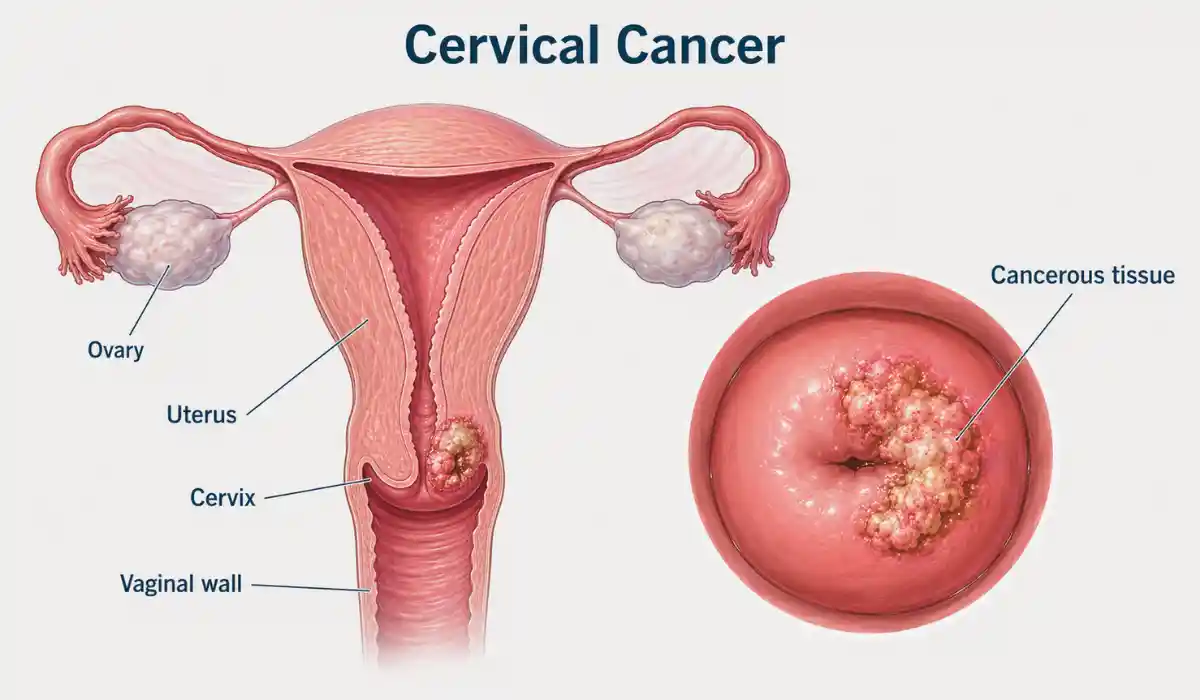
Cervical cancer is not usually inherited. Most cases develop because of a persistent infection with a high-risk strain of human papillomavirus, or HPV, rather than a genetic change passed down through families.
Family history can still matter. A mother or sister with cervical cancer may slightly raise your risk, but screening history, smoking, immune function, HPV exposure, and access to preventive care usually play a larger role.
Is Cervical Cancer Hereditary?
Most cervical cancers are not hereditary. They involve genetic changes inside cervical cells, but those changes usually develop during life rather than being inherited.
The words genetic and hereditary do not mean exactly the same thing. Every cancer contains gene changes that affect how cells grow. However, hereditary cancer begins with a harmful gene variant passed through an egg or sperm.
Cervical cancer usually begins after persistent high-risk HPV infection disrupts normal cell controls. Genetic changes found only in a cervical tumor cannot normally be passed to children.
Tumor mutations may help doctors understand how a cancer behaves or select a suitable treatment. They do not automatically mean that close relatives carry the same risk.
Does Family History Increase the Risk?
Cervical cancer can occur more often in some families. According to the American Cancer Society, having a mother or sister with the disease is associated with a higher risk than having no close family history.
Researchers have not identified one common inherited “cervical cancer gene” responsible for most cases. Inherited differences in immune response might affect how effectively someone clears an HPV infection.
Relatives may also share certain risk factors, including smoking or exposure to secondhand smoke, similar cervical screening habits, limited access to preventive healthcare, weakened immune function, and comparable risks of HPV exposure.
A family history should encourage consistent prevention rather than panic. It does not mean that cervical cancer is unavoidable.
What Usually Causes Cervical Cancer?
Persistent infection with certain high-risk HPV types causes the great majority of cervical cancers. HPV spreads through intimate skin-to-skin contact and is extremely common.
Most HPV infections clear without causing serious problems. In some people, however, a high-risk infection remains for years and produces abnormal cervical cell changes. Without monitoring or treatment, some of these changes can eventually become cancer.
Other factors can also raise the risk of cervical cancer. These include smoking, living with HIV, having a weakened immune system, missing recommended cervical screenings, and failing to complete follow-up care after an abnormal Pap or HPV test result.
Having HPV does not mean that someone has cervical cancer. HPV testing looks for high-risk virus types, while a Pap test looks for abnormal cervical cells.
Is Genetic Testing Usually Needed?
Most people with cervical cancer or a family history of the disease do not need routine inherited cancer testing. HPV tests, Pap tests, colposcopy, and biopsy are generally more useful for detecting changes in the cervix.
A doctor may suggest genetic counseling when cancer develops at an unusually young age, several close relatives have rare or uncommon cancers, one person has been diagnosed with multiple cancers, or the family history points to a possible inherited cancer syndrome.
A genetic counselor can review the complete family history and determine whether testing is likely to provide useful information.
Tumor testing is different
Tumor profiling examines cancer cells for acquired genetic changes that could affect treatment. Inherited genetic testing commonly uses blood or saliva to look for variants present throughout the body.
Finding a mutation in a tumor does not always mean that the mutation was inherited.
Warning Signs to Take Seriously
Early cervical cancer may not produce noticeable symptoms. This is one reason regular screening remains important.
Possible warning signs of cervical cancer include bleeding after sex, bleeding between periods, or any bleeding after menopause. Other symptoms can include unusual watery or bloody vaginal discharge, pain during sex, and persistent pelvic discomfort.
These symptoms often have causes other than cancer, including infections, polyps, fibroids, or hormonal changes. However, new, persistent, or worsening symptoms should be evaluated by a healthcare professional.
Practical Ways to Lower Your Risk
Although cervical cancer cannot always be prevented, several practical steps can greatly reduce the risk. Vaccination, regular screening, safer sexual practices, and healthy lifestyle choices all support better cervical health.
Get HPV Vaccination When Appropriate
The HPV vaccine protects against virus types responsible for many cervical cancers. It works best when given before HPV exposure, although some adults may also benefit after discussing their circumstances with a healthcare professional.
Vaccination prevents new infections. It does not treat an HPV infection or abnormal cervical cells that are already present.
Keep up with cervical screening
Pap tests check for abnormal cervical cells, while HPV tests detect high-risk virus types linked to these changes. Regular screening can help identify early cell changes before they develop into more serious cervical cancer chances .
A cervical cancer ultrasound may help examine the cervix and nearby organs, but it does not replace Pap or HPV testing. Any abnormal result should receive proper medical follow-up.
Avoid smoking
Smoking damages cervical cells and can make it harder for the immune system to control an HPV infection. Stopping smoking supports cervical, heart, and lung health.
Practice safer sex
Condoms can lower the likelihood of HPV exposure, but they do not provide complete protection because the virus can affect skin that a condom does not cover.
When to Seek Professional Help?
Arrange an appointment if you experience unusual vaginal bleeding, persistent discharge, pain during sex, or ongoing pelvic discomfort.
You should also contact a healthcare professional if your cervical screening is overdue, an HPV or Pap test result was abnormal, or you missed a recommended follow-up appointment. Medical advice is also important when a close relative developed cervical cancer at a young age or several family members have had related or uncommon cancers.
People with HIV or another condition that weakens immunity may require a different screening plan.
Final Thoughts
Cervical cancer is genetic in the sense that cancer cells contain altered genes, but it is usually not inherited. Persistent high-risk HPV infection is the main cause, while family history appears to have a smaller influence.
HPV vaccination, regular screening, timely follow-up, avoiding smoking, and reporting unusual symptoms provide the most practical protection. Anyone concerned about an unusual family cancer pattern can speak with a doctor or genetic counselor.
FAQs
No. Most cervical cancers develop after a persistent high-risk HPV infection. Inherited genes may influence susceptibility, but cervical cancer is rarely passed directly through families.
A mother or sister with cervical cancer may slightly increase your risk. Shared behaviors, screening patterns, smoking exposure, or immune-related inherited differences may partly explain the connection.
Usually not. Genetic testing is considered when cancer occurs unusually young, several relatives have related cancers, or a clinician suspects a rare hereditary cancer syndrome.
No. HPV is extremely common, and most infections clear without causing cancer. Risk rises when a high-risk infection persists and produces abnormal cervical cell changes.
Yes. The HPV vaccine prevents infections from important cancer-causing HPV types. Screening remains necessary because vaccination does not cover every type or treat existing infection.
Contact a clinician for bleeding after sex, bleeding between periods, postmenopausal bleeding, unusual watery or bloody discharge, or ongoing pelvic pain, even if symptoms seem mild.