
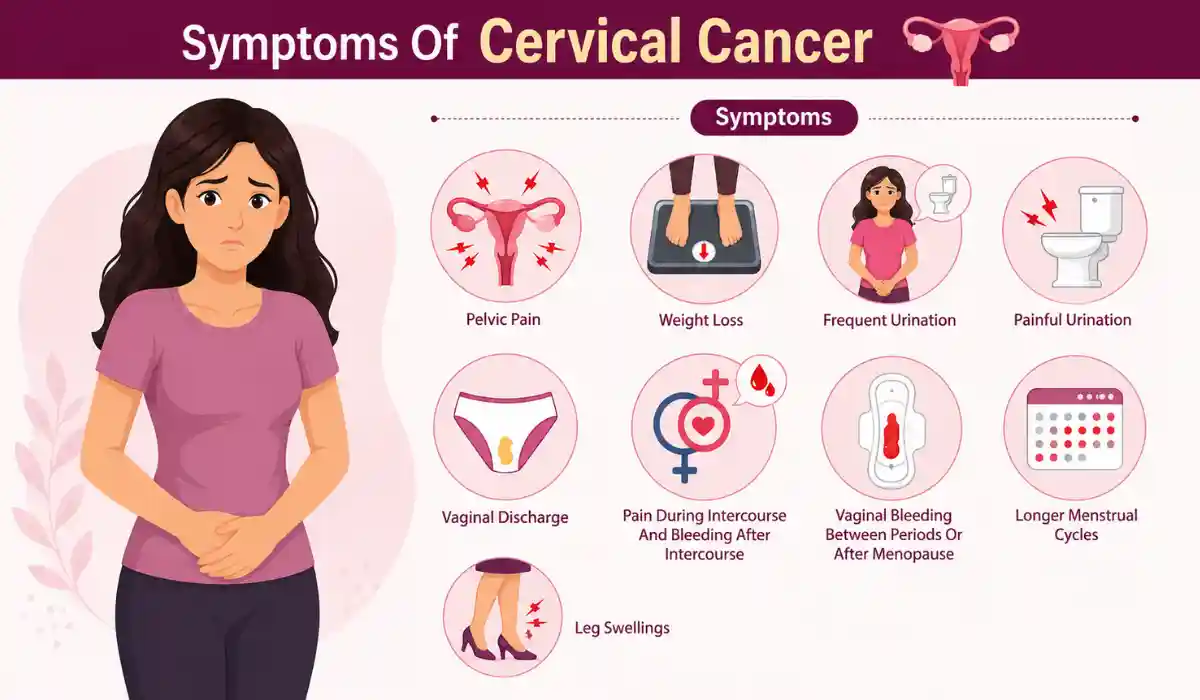
Women often search for signs of cervical cancer after experiencing unusual bleeding, changes in vaginal discharge, or ongoing pelvic discomfort. Although these symptoms can be worrying, they do not always point to cancer. Hormonal changes, infections, fibroids, cervical polyps, and several other common conditions can cause similar symptoms.
Early cervical cancer often causes no noticeable symptoms. This is why routine cervical screening remains important even when you feel healthy. New or persistent symptoms should also be checked rather than ignored.
What Is Cervical Cancer?
Cervical cancer begins in the cervix, which is the lower part of the uterus that opens into the vagina. It is also known medically as cervical carcinoma. Nearly all cases are linked to a long-lasting infection with certain high-risk types of human papillomavirus, commonly called HPV.
Most HPV infections clear naturally within one or two years. However, a persistent high-risk infection can gradually cause abnormal cervical cell changes. Without detection and treatment, some of these changes can eventually become cancer.
Common Warning Signs
Cervical cancer may not cause symptoms in its early stages. When warning signs do appear, they can vary from one woman to another and often overlap with other health conditions.
Unusual Vaginal Bleeding
Abnormal vaginal bleeding is one of the main warning signs associated with cervical cancer. This may include bleeding after sex, between menstrual periods, after menopause, or periods that become heavier or last longer than usual.
One isolated episode does not confirm cancer. However, bleeding that is new, repeated, unexplained, or noticeably different from your usual cycle should be discussed with a healthcare professional.
Changes in Vaginal Discharge
Cervical cancer can sometimes cause vaginal discharge that is watery, blood-stained, strong-smelling, or clearly different from your normal discharge. It may occur between periods or after menopause.
Vaginal discharge is more commonly linked to infection, hormonal changes, or another noncancerous condition. A persistent change still needs assessment, especially when it occurs with bleeding, pelvic pain, or discomfort during sex.
Pelvic or Lower Abdominal Pain
Pain in the pelvis, lower abdomen, or lower back has many possible causes. Menstrual cramps, endometriosis, ovarian cysts, urinary problems, and digestive conditions can all cause discomfort in these areas.
Pain linked to cervical cancer may be persistent or appear without a clear explanation. Pelvic pain that continues, becomes stronger, or occurs alongside abnormal bleeding should not be dismissed.
Pain or Bleeding During Sex
Pain during sex can result from vaginal dryness, infection, inflammation, endometriosis, or pelvic floor problems. Changes affecting the cervix can also cause pain or bleeding during or after vaginal sex.
A single mild episode may not signal a serious condition. Repeated pain or bleeding deserves a medical examination, particularly when it is a new symptom.
Possible Signs of Advanced Cervical Cancer
When cervical cancer grows beyond the cervix, symptoms may become broader. Possible signs include swelling in one or both legs, dull back pain, abdominal pain, tiredness, painful urination, blood in the urine, or difficulty passing urine or stool.
These symptoms are not specific to cervical cancer. They still require timely medical care because they can indicate another significant gynecological, urinary, digestive, or circulation-related problem.
Symptoms Do Not Confirm Cancer
No symptom can confirm cervical cancer by itself. A healthcare professional may begin by asking about your symptoms and medical history before performing a pelvic examination.
Further investigation may involve a colposcopy, which allows the cervix to be examined closely. A biopsy removes a small tissue sample so a pathologist can check it for cancer cells.
A Pap test checks cervical cells for abnormal changes. An HPV test looks for high-risk HPV types that can cause those changes. These are mainly screening tests rather than final diagnostic tests.
Screening Matters Even Without Symptoms
Cervical screening aims to detect high-risk HPV, precancerous changes, or cancer before symptoms develop. The appropriate test and timing depend on your age, health history, previous results, and local screening guidelines.
HPV vaccination does not remove the need for recommended screening because the vaccine does not protect against every high-risk HPV type. Follow-up is also important after any abnormal HPV or Pap result.
An abnormal Pap result does not usually mean that a woman has cancer. Most abnormal results are linked to HPV infections or early cell changes that can be monitored or treated.
Practical Ways to Lower Cervical Cancer Risk
HPV vaccination protects against HPV types responsible for many cervical cancers. A healthcare professional can advise whether vaccination or completing a missed vaccine series is suitable for your age and medical history.
Understanding cervical cancer risks also means keeping up with recommended screening. Attend every scheduled test and do not skip follow-up appointments after an abnormal result, even when you feel well.
Avoiding tobacco can further reduce risk. Condoms may lower HPV transmission, although they cannot provide complete protection because HPV can affect skin outside the covered area.
When to Seek Professional Help?
Arrange a medical appointment if you develop bleeding after sex, bleeding between periods, heavier or longer periods, bleeding after menopause, persistent unusual discharge, pelvic pain, or pain during sex.
Do not wait until your next routine cervical screening appointment when symptoms are present. Screening mainly checks people without symptoms, while new symptoms require a clinical assessment.
Seek urgent medical care for very heavy bleeding, fainting, severe pelvic or abdominal pain, breathing difficulty, or rapidly worsening weakness. These symptoms can have several causes and require prompt assessment.
Final Thoughts
Knowing the possible signs of cervical cancer can make it easier to notice changes that should be checked. Common symptoms include unusual vaginal bleeding, changes in discharge, pelvic discomfort, and pain during sex.
These symptoms are often caused by something other than cancer. However, early cervical cancer can be silent. Regular screening and timely medical evaluation remain the safest ways to protect your health.
FAQs
Early cervical cancer often causes no symptoms. When signs appear, unusual vaginal bleeding, changed discharge, pelvic pain, or pain during sex are common concerns for women.
Bleeding after sex can have several causes, including cervical irritation, infection, polyps, or hormonal changes. Because cancer is possible, repeated bleeding needs assessment by a clinician.
An unusual discharge may be watery, bloody, strong-smelling, or different from your normal pattern. Discharge alone does not confirm cancer, but persistent changes need evaluation.
A Pap test finds abnormal cervical cells, while an HPV test checks for high-risk HPV. Symptoms still require medical evaluation, even after a recent normal screening result.
Most abnormal Pap results are caused by HPV or early cell changes, not cancer. Follow-up testing determines whether monitoring, colposcopy, or treatment is appropriate for each patient.
Contact a healthcare professional promptly for bleeding after menopause, repeated bleeding after sex, unexplained pelvic pain, or persistent unusual discharge. Heavy bleeding requires urgent care.