
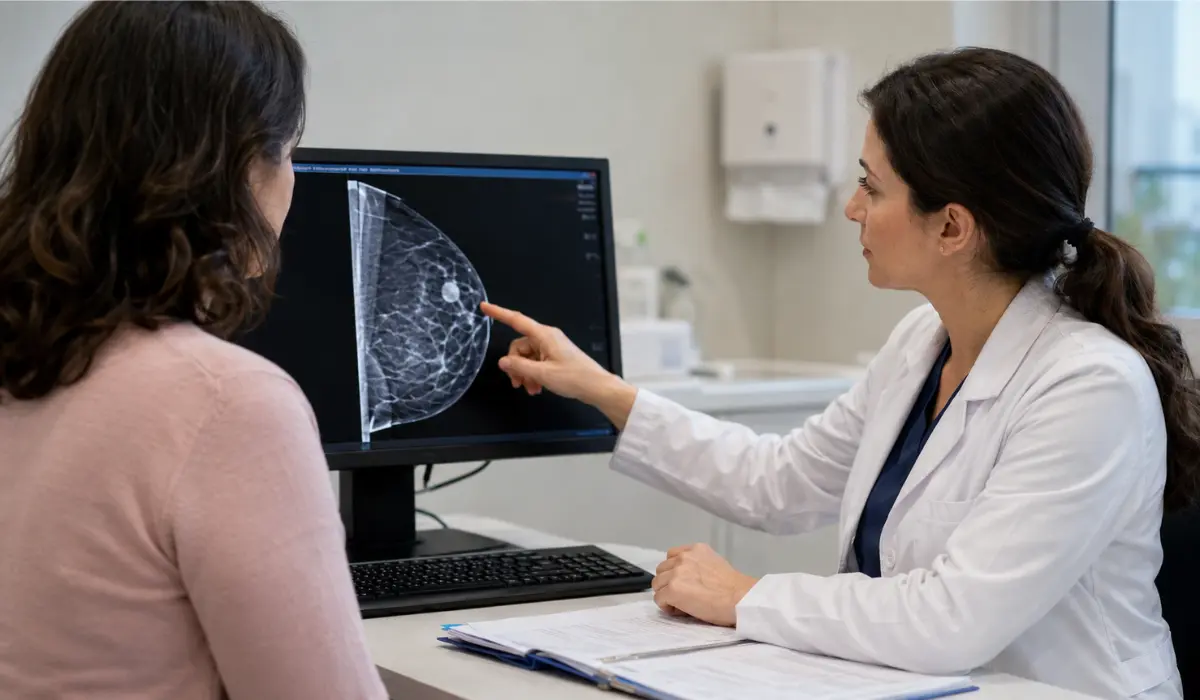
Invasive breast cancer is a type of breast cancer that has spread from where it first started into nearby breast tissue. It usually begins in the milk ducts or lobules and then grows beyond those areas.
This does not always mean the cancer has spread to distant parts of the body. In many cases, invasive breast cancer is still found only in the breast or nearby lymph nodes, especially when detected early.
Doctors diagnose invasive breast cancer through imaging tests and a biopsy. Treatment depends on the cancer stage, type, size, hormone receptor status, HER2 status, and the person’s overall health.
What Does Invasive Breast Cancer Mean?
“Invasive” means the cancer has broken out of its original location and entered nearby tissue. This does not always mean the cancer has spread far away in the body. It may still be small and limited to the breast.
For example, cancer may begin inside a milk duct. If it stays inside the duct, it is called ductal carcinoma in situ, or DCIS. If it grows through the duct wall and enters nearby breast tissue, it becomes invasive breast cancer.
Doctors use imaging tests, biopsy results, and staging tests to understand how far the cancer has spread and what treatment may work best.
Common Types Of Invasive Breast Cancer
Invasive Ductal Carcinoma
Invasive ductal carcinoma, also called IDC, is the most common type of invasive breast cancer. It starts in the milk ducts and then grows into nearby breast tissue. From there, it may spread to lymph nodes or other areas if not treated.
IDC may appear as a lump, an abnormal mammogram finding, nipple changes, or skin changes. Some people do not notice symptoms, which is why regular screening is important.
Invasive Lobular Carcinoma
Invasive lobular carcinoma, or ILC, starts in the lobules, which are the milk-producing glands of the breast. It can be harder to feel as a firm lump because it may grow in a more spread-out pattern.
Some people may notice breast thickening, swelling, fullness, nipple changes, or a change in breast shape. ILC can sometimes be more difficult to detect on routine imaging, so follow-up testing may be needed.
Symptoms Of Invasive Breast Cancer
Invasive breast cancer does not always cause symptoms in the early stage. When symptoms do appear, they may include:
- A new lump in the breast or underarm
- Swelling or thickening in part of the breast
- Skin dimpling or irritation
- Nipple turning inward
- Nipple discharge, especially if bloody
- Redness, flaky skin, or changes around the nipple
- A change in breast size or shape
- Breast pain that does not go away
The CDC lists these as possible warning signs of breast cancer, including early breast cancer, but not every breast change means cancer. Any new or unusual breast change should be checked by a healthcare provider.
What Causes Invasive Breast Cancer?
Invasive breast cancer develops when breast cells grow abnormally and do not follow the body’s normal control system. These cells can multiply, form a tumor, and invade nearby tissue.
The exact cause is not always clear. Several factors may increase risk, including age, family history, inherited gene changes such as BRCA1 or BRCA2, dense breast tissue, previous chest radiation, hormone exposure, obesity after menopause, alcohol use, and lack of physical activity.
Having one or more risk factors does not mean someone will definitely get breast cancer. Some people develop breast cancer without any known major risk factor.
How Is Invasive Breast Cancer Diagnosed?
Diagnosis often starts with a breast exam and a discussion of symptoms. Imaging tests such as mammogram, ultrasound, or breast MRI may be used to look more closely at suspicious areas.
A biopsy is usually needed to confirm breast cancer. During a biopsy, a small tissue sample is removed and tested in a lab. A biopsy is the only way to know for sure whether a suspicious breast change is cancer.
The pathology report may include important details such as:
- Cancer type
- Tumor grade
- Hormone receptor status
- HER2 status
- Tumor size
- Whether lymph nodes are involved
These results help doctors choose the most suitable treatment plan.
Stages Of Invasive Breast Cancer
Breast cancer staging explains how much cancer is in the body and whether it has spread. Stages usually range from stage 1 to stage 4.
Stage 1 often means the cancer is small and may be limited to the breast. Stage 2 or 3 may mean the tumor is larger or has spread to nearby lymph nodes. Stage 4 means the cancer has spread to distant parts of the body, such as the bones, liver, lungs, or brain.
The stage does not tell the whole story. Hormone receptors, HER2 status, tumor grade, and response to treatment also matter.
Treatment Options For Invasive Breast Cancer
Treatment for invasive breast cancer is personalized. Some people need only local treatment, while others need a combination of treatments.
Surgery
Surgery may involve removing the cancerous lump, called lumpectomy, or removing the whole breast, called mastectomy. Some lymph nodes may also be tested to see whether cancer has spread.
Radiation Therapy
Radiation uses high-energy beams to destroy cancer cells. It is often used after lumpectomy and sometimes after mastectomy, especially if lymph nodes are involved.
Chemotherapy
Chemotherapy uses medicines to kill fast-growing cancer cells. It may be given before surgery to shrink the tumor or after surgery to lower the risk of cancer returning.
Hormone Therapy
If the cancer is hormone receptor-positive, hormone therapy may be used to block estrogen or lower hormone levels. This can help reduce the risk of recurrence.
Targeted Therapy And Immunotherapy
Targeted therapy may be used for cancers with specific markers, such as HER2-positive breast cancer. Immunotherapy may be used in some cases, especially certain triple-negative breast cancers. Treatment options can include surgery, radiation, chemotherapy, hormone therapy, targeted therapy, and immunotherapy depending on the case.
Can Invasive Breast Cancer Be Cured?
Many cases of invasive breast cancer can be treated successfully, especially when found early. The chance of recovery depends on the stage, cancer biology, treatment response, and overall health.
Even when breast cancer is advanced, treatment can help control the disease, reduce symptoms, and improve quality of life. Early diagnosis, regular follow-up, and completing the recommended treatment plan are important.
When To See A Doctor?
See a doctor if you notice a new breast lump, nipple discharge, skin dimpling, nipple inversion, breast swelling, persistent pain, or any unusual change in breast shape or size.
It is also important to follow recommended breast screening guidelines based on age, family history, and personal risk. Breast cancer may be found on a mammogram before symptoms appear.
FAQs
1. Is invasive breast cancer the same as metastatic breast cancer?
No. Invasive means cancer has entered nearby breast tissue. Metastatic means it has spread to distant body parts, such as bones, lungs, liver, or brain.
2. Is invasive breast cancer always serious?
Yes, it should be taken seriously. However, many cases are treatable, especially when diagnosed early and managed with the right treatment plan.
3. What is the most common invasive breast cancer?
Invasive ductal carcinoma is the most common type. It starts in the milk ducts and then grows into nearby breast tissue.
4. Can invasive breast cancer be found early?
Yes. Mammograms, breast exams, and follow-up testing can help find breast cancer early, sometimes before a person notices any symptoms.
5. Does invasive breast cancer always need chemotherapy?
No. Some people need chemotherapy, while others may need surgery, radiation, hormone therapy, targeted therapy, or a combination of treatments.
6. What is the difference between invasive and non-invasive breast cancer?
Non-invasive breast cancer stays where it started. Invasive breast cancer has moved into nearby breast tissue and may spread if not treated.
References
National Cancer Institute
Definition of Invasive Breast Cancer
https://www.cancer.gov/publications/dictionaries/cancer-terms/def/invasive-breast-cancer
American Cancer Society
Invasive Breast Cancer: Invasive Ductal Carcinoma and Invasive Lobular Carcinoma
https://www.cancer.org/cancer/types/breast-cancer/types-of-breast-cancer/invasive-breast-cancer.html
CDC
Symptoms of Breast Cancer
https://www.cdc.gov/breast-cancer/symptoms/index.html