
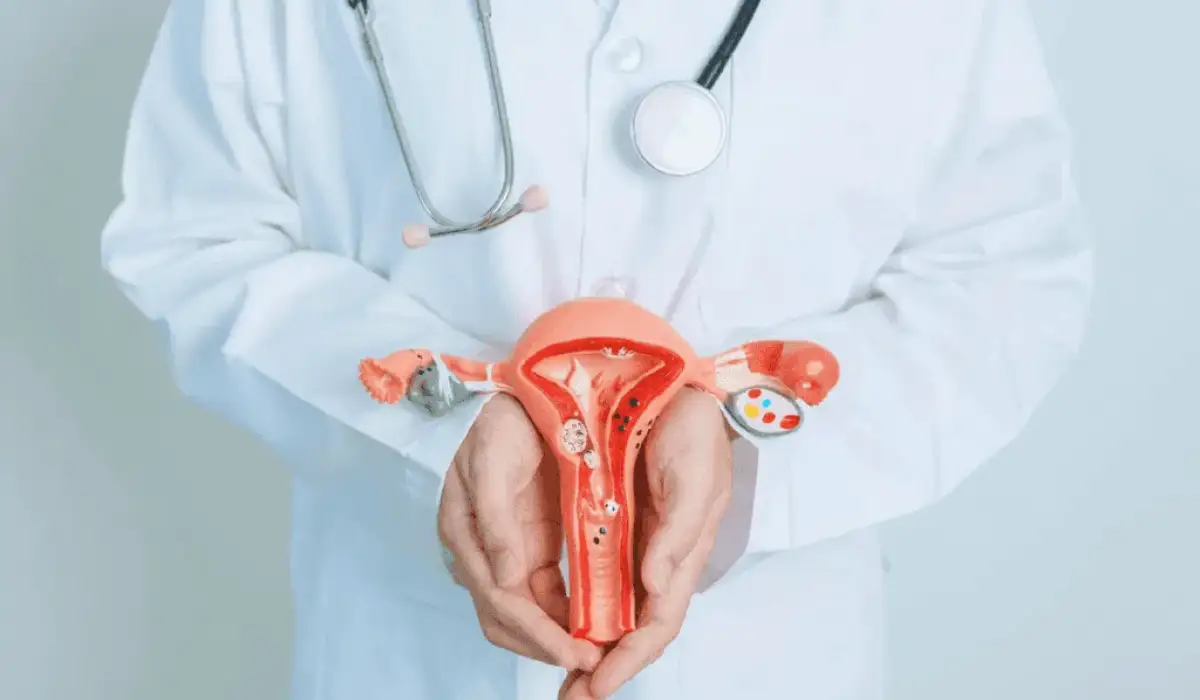
An enlarged uterus can cause heavy or longer periods, pelvic pressure, abdominal fullness, frequent urination, constipation, back discomfort, or pain during sex. In some cases, it causes no clear symptoms and is found during a routine examination.
An enlarged uterus is not a diagnosis by itself. It is a physical finding that may result from pregnancy, uterine fibroids, adenomyosis, or another condition. A pelvic examination and imaging can help identify the cause.
What Does an Enlarged Uterus Mean?
The uterus normally changes in size during pregnancy and gradually becomes smaller after delivery. Outside pregnancy, enlargement may occur when the uterine muscle thickens or when growths develop inside or around the uterus.
A clinician may notice that the uterus feels larger or has an irregular shape during a pelvic examination. Ultrasound is often used to confirm its size and look for fibroids, adenomyosis, or other structural changes.
The size of the uterus does not always match the severity of symptoms. A relatively small fibroid in a sensitive location may cause heavy bleeding, while a larger uterus may produce few obvious problems.
What Are the Common Symptoms?
Heavy or Prolonged Periods
Heavy menstrual bleeding is one of the most common signs linked with uterine fibroids and adenomyosis. Periods may last longer than usual, include large clots, or require changing pads or tampons very frequently.
Blood loss over time may lead to anemia. Possible signs include fatigue, weakness, dizziness, headaches, pale skin, or shortness of breath during everyday activity.
Bleeding between periods or after sex should also be discussed with a healthcare professional. Any vaginal bleeding after menopause requires medical evaluation.
Pelvic Pressure or Fullness
A larger uterus can create a sensation of heaviness, pressure, or fullness in the lower abdomen. Some women describe it as persistent bloating that does not improve after passing gas or having a bowel movement.
The lower abdomen may appear rounded or swollen. Clothing may feel tighter around the waist even without a major change in body weight. Fibroids can enlarge both the uterus and abdomen.
Painful Periods and Pelvic Pain
Strong menstrual cramps may occur when the uterine muscle contracts around fibroids or when adenomyosis affects the muscular wall. Pain may become more noticeable before or during a period.
Some people experience a persistent dull ache rather than sharp pain. Discomfort may spread to the lower back, hips, or upper thighs. Pain during sex can also occur.
Sudden severe pain, especially with nausea or fever, needs prompt evaluation. A fibroid attached by a narrow stem can occasionally twist or lose part of its blood supply.
Frequent Urination
An enlarged uterus may press against the bladder. This can create a frequent need to urinate, sudden urgency, or the feeling that the bladder has not emptied completely.
These symptoms may resemble a urinary tract infection. However, uterine pressure does not usually cause burning during urination. A urine test may be needed when the cause is unclear.
Enlarged Uterus vs UTI
An enlarged uterus and a UTI can both cause pelvic pressure and frequent urination. However, a UTI in Women more often causes burning during urination, sudden urgency, and cloudy or bloody urine. An enlarged uterus is more likely to cause heavy periods, abdominal fullness, constipation, or pain during sex.
Constipation and Bowel Pressure
Pressure against the rectum or bowel may cause constipation, straining, abdominal discomfort, or the feeling that a bowel movement is incomplete.
Digestive symptoms have many possible causes. Persistent constipation with pelvic pressure, abnormal bleeding, or abdominal enlargement should not automatically be blamed on diet.
Fertility or Pregnancy Problems
Some uterine conditions can affect fertility or pregnancy, depending on their location and severity. Fibroids may sometimes interfere with implantation, increase miscarriage risk, or contribute to complications during pregnancy.
Many women with fibroids or adenomyosis still become pregnant. Anyone planning pregnancy should discuss symptoms and imaging results with a gynecologist.
What Causes the Uterus to Become Enlarged?
Uterine Fibroids
Fibroids are noncancerous growths made from muscle and other tissue. They may grow within the uterine wall, inside its cavity, or on its outer surface.
Fibroids are a common cause of uterine enlargement. They may cause heavy bleeding, pelvic pressure, frequent urination, painful periods, lower back pain, or reproductive difficulties. Some cause no symptoms.
Adenomyosis
Adenomyosis occurs when tissue similar to the uterine lining grows into the muscular wall. This can make the uterus thicker and larger.
Common symptoms include heavy or prolonged periods, worsening menstrual cramps, pelvic pain, and pain during sex. Some people with adenomyosis have no symptoms.
Pregnancy
Pregnancy naturally causes the uterus to expand as the fetus develops. Early pregnancy may cause missed periods, nausea, breast tenderness, and fatigue before abdominal enlargement becomes obvious.
A pregnancy test is often part of the evaluation when uterine enlargement occurs in someone who could be pregnant.
Less Common Causes
Less common causes include uterine abnormalities, endometrial disease, or certain cancers. Cancer is not the most likely explanation for an enlarged uterus, but abnormal bleeding must be assessed rather than ignored.
Bleeding after menopause, bleeding between periods, unusual discharge, pelvic pain, or painful urination may require further testing.
How Is an Enlarged Uterus Diagnosed?
Evaluation usually begins with questions about menstrual bleeding, pain, bladder symptoms, bowel changes, pregnancy history, and fertility plans. A pelvic examination can help estimate uterine size and shape.
A pregnancy test and pelvic ultrasound may follow. Ultrasound can show fibroids and other structural changes. MRI may provide more detail when ultrasound results are uncertain or treatment is being planned.
Blood tests may check for anemia after heavy bleeding. Unusual bleeding may also require an examination of the uterine lining, especially after menopause or when risk factors are present.
Yeast Infection And Enlarged Uterus
A yeast infection does not usually enlarge the uterus. It mainly causes vaginal itching, soreness, redness, thick discharge, and discomfort during urination or sex. An enlarged uterus is more likely to cause heavy periods, pelvic pressure, abdominal fullness, constipation, or frequent urination.
How Is It Treated?
Treatment depends on the underlying cause, symptom severity, age, general health, and future pregnancy plans. Enlargement without troubling symptoms may only require monitoring.
Pain relievers or hormonal medicines may help control cramps and heavy bleeding. Some treatments reduce symptoms without permanently removing fibroids, and symptoms may return after medication stops.
Procedures may include removing individual fibroids, blocking their blood supply, or using other methods to control bleeding. Hysterectomy removes the uterus and may be considered when symptoms are severe and other treatments have not helped.
Practical Steps Before Your Appointment
Keep a record of period dates, bleeding amount, clots, pain, urinary frequency, bowel changes, and abdominal swelling. Note whether symptoms interfere with sleep, work, exercise, or sexual activity.
Bring a list of medications and previous imaging results. Tell the clinician whether pregnancy is desired because some treatments can affect fertility.
Avoid relying on supplements or home remedies to shrink the uterus without a diagnosis. Different causes require different treatment plans.
When Should You Seek Medical Help?
Arrange a medical appointment for periods lasting longer than usual, bleeding between cycles, persistent pelvic pressure, worsening cramps, frequent urination, constipation, or unexplained abdominal enlargement.
Seek urgent care for extremely heavy bleeding, fainting, severe weakness, sudden intense pelvic pain, fever, or vomiting.
Bleeding after menopause should always be evaluated. Although many causes are benign, it may be an early sign of a condition that needs treatment.
Final Thoughts
An enlarged uterus may cause heavy bleeding, pelvic fullness, painful periods, urinary pressure, constipation, or back pain. Fibroids and adenomyosis are common causes, but symptoms alone cannot confirm the diagnosis. Readers can review official uterine fibroid guidance for more information about common causes and symptoms.
A pelvic examination and imaging can identify the reason for enlargement. Prompt evaluation is especially important when bleeding is severe, symptoms change quickly, or bleeding occurs after menopause. Abnormal uterine bleeding guidance can also help explain when medical care is needed.
FAQs
An enlarged uterus can make the lower abdomen look fuller, but it does not usually cause major overall weight gain unless several large fibroids are present.
No. Pregnancy, adenomyosis, fibroids, and less common uterine conditions can increase uterine size. A pelvic examination and imaging usually help identify the actual underlying cause.
It may shrink after pregnancy or when fibroids decrease after menopause. Adenomyosis and other causes may persist, so continuing or worsening symptoms should be medically assessed.
Depending on the cause, it may affect fertility, miscarriage risk, fetal position, or delivery. Many women still have healthy pregnancies with careful and regular medical monitoring.
Not always. Benign fibroids and adenomyosis are common causes. However, abnormal bleeding, rapid symptom changes, severe pain, or postmenopausal bleeding require prompt medical evaluation.
Fibroids often become smaller as estrogen levels fall after menopause, but this does not happen in everyone. New enlargement, pelvic pressure, or bleeding needs medical assessment.
References
- American College of Obstetricians and Gynecologists
Uterine Fibroids - MedlinePlus
Adenomyosis