
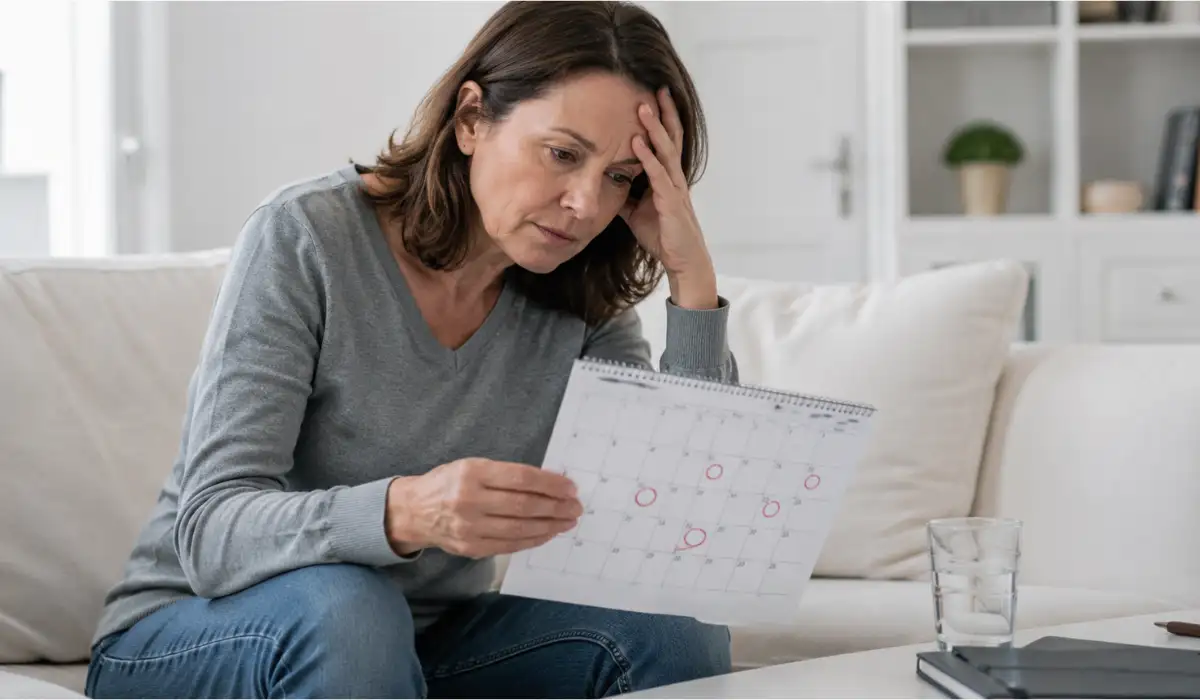
Irregular periods during perimenopause are very common, but they can still feel confusing. A period may arrive early, come late, become heavier, become lighter, or skip a month completely. Some women also notice spotting between periods or changes in period color, flow, and length.
Perimenopause is the transition stage before menopause. During this time, estrogen and progesterone may rise and fall unevenly, and ovulation may not happen every month. These changes can affect the lining of the uterus and make periods less predictable.
For many women, irregular periods are a normal part of this stage. However, not every bleeding change should be ignored. Heavy bleeding, bleeding after sex, bleeding after menopause, or bleeding with pain should be checked by a healthcare provider.
What Does Perimenopause Mean?
Perimenopause means “around menopause.” It is the natural phase when the ovaries slowly start making less reproductive hormones. This stage can begin in the 40s, but some women notice changes earlier or later.
Menopause is confirmed after 12 full months without a period. Before that point, periods may still happen, even if they are irregular. Some months may feel normal, while others may bring unexpected bleeding or skipped cycles.
Perimenopause can last for several years. One woman may have mild changes for a short time, while another may have irregular cycles, hot flashes, sleep problems, and mood changes for years.
Why Do Periods Become Irregular During Perimenopause?
The main reason is hormonal fluctuation. In a regular menstrual cycle, estrogen helps build the uterine lining, and progesterone helps control when that lining sheds. During perimenopause, these hormones can become unpredictable.
Ovulation may also become less regular. If the ovaries do not release an egg in a cycle, progesterone levels may stay low. This can make the uterine lining build up differently, which may lead to late periods, heavier bleeding, or spotting.
Estrogen can also rise higher than expected in some cycles and drop lower in others. Because of this, the period pattern may change from month to month. This is why perimenopause bleeding can feel random even in women who had regular periods before.
Common Period Changes During Perimenopause
Periods may come closer together. For example, a cycle that was once 28 days may become 21 or 24 days. Periods may also come farther apart, with some women going 40, 50, or 60 days without bleeding.
Flow can change too. A period may be very light one month and heavy the next. Some women notice brown spotting before or after bleeding. Others may have clots, longer bleeding days, or sudden heavier flow.
The number of bleeding days can also shift. A period that once lasted five days may last two days or stretch to eight days. Mild variation can be normal, but very heavy or long bleeding should not be dismissed.
Are Irregular Periods During Perimenopause Normal?
In many cases, yes. Irregular periods during perimenopause can be normal when they happen gradually and are not linked with severe pain, very heavy bleeding, or unusual discharge. A skipped period or a shorter cycle may simply reflect changing hormones.
However, “normal for perimenopause” does not mean every symptom is harmless. Other conditions can also cause irregular bleeding. These include fibroids, polyps, thyroid problems, infections, pregnancy, medication effects, and uterine lining changes.
This is why it is important to look at the full pattern. Occasional changes may be less concerning. Bleeding that becomes frequent, heavy, painful, or unusual should be discussed with a doctor.
Symptoms That May Happen Along With Irregular Periods
Perimenopause can affect more than the menstrual cycle. Many women also notice hot flashes, night sweats, sleep disturbance, breast tenderness, mood swings, anxiety, brain fog, weight changes, and lower energy.
Vaginal dryness and discomfort during sex can also happen as estrogen levels change. These symptoms may come and go, which is one reason perimenopause can be hard to recognize at first.
When Should You See A Doctor?
You should speak with a healthcare provider if your bleeding is very heavy, lasts longer than usual, or happens often between periods. Soaking through pads quickly, passing large clots, or feeling weak and dizzy during bleeding should be checked.
Bleeding after sex also needs medical attention. So does bleeding after menopause, which means bleeding after 12 months without any period.
You should also get checked if irregular periods come with pelvic pain, foul-smelling discharge, fever, unexplained weight loss, or new bleeding after starting medication. If there is any chance of pregnancy, take a pregnancy test.
How To Track Irregular Periods?
Tracking your cycle can help you understand what is changing. Write down the first day of bleeding, the number of bleeding days, flow level, spotting, cramps, clots, and symptoms such as hot flashes or mood changes.
This information can help your doctor see whether your pattern fits perimenopause or needs further evaluation. A simple calendar, notebook, or period-tracking app can work.
Home Care And Lifestyle Tips
A healthy routine may not stop irregular periods completely, but it can support the body during hormonal changes. Try to eat balanced meals with protein, fiber, fruits, vegetables, and healthy fats.
Regular physical activity may help mood, sleep, weight balance, and overall energy. Walking, strength training, yoga, and stretching can all be useful.
Sleep is also important. Perimenopause can disturb sleep, especially if night sweats occur. A cool bedroom, lighter clothing, reduced evening caffeine, and a regular sleep schedule may help.
Stress can affect the menstrual cycle and make symptoms feel worse. Relaxation practices, breathing exercises, gentle movement, and enough rest can support hormonal balance.
Iron-rich foods may be helpful if periods are heavy. Examples include beans, lentils, spinach, eggs, fish, and lean meats. If bleeding is heavy or fatigue is strong, ask a doctor whether iron levels should be tested.
Medical Options For Irregular Periods During Perimenopause
Treatment depends on your symptoms, health history, age, and bleeding pattern. Some women only need monitoring, while others may need testing or symptom support.
A doctor may suggest blood tests, a pelvic exam, ultrasound, Pap test, pregnancy test, or endometrial evaluation depending on symptoms. These tests help rule out other causes of abnormal bleeding.
Treatment may include hormonal birth control, a hormonal IUD, progesterone therapy, or other medicines to manage heavy bleeding. Some women may be offered menopause hormone therapy for hot flashes, but this is not suitable for everyone.
Do not start hormone treatment without medical advice. The best option depends on personal risk factors, including blood pressure, migraine history, blood clot risk, smoking, and past medical conditions.
Final Verdict
Irregular periods during perimenopause are often part of the natural transition toward menopause. Cycles may become shorter, longer, heavier, lighter, or skipped because hormone levels and ovulation patterns are changing.
Still, it is important to pay attention to your body. Heavy bleeding, bleeding after sex, bleeding after menopause, severe pain, or unusual discharge should not be ignored.
Tracking your cycle, supporting your health, and speaking with a doctor when symptoms feel unusual can make this stage easier to manage.
FAQ
Irregular periods can last for a few months or several years during perimenopause. The pattern varies for each woman and usually ends after menopause.
Yes, perimenopause can sometimes cause shorter cycles, which may feel like two periods in one month. Frequent bleeding should still be checked.
Heavier periods can happen during perimenopause, but very heavy bleeding is not something to ignore. A doctor can check for other causes.
Yes, skipped periods are common as ovulation becomes less predictable. Menopause is confirmed only after 12 months without any period.
Get medical advice if bleeding is very heavy, happens after sex, occurs after menopause, causes dizziness, or comes with pelvic pain or unusual discharge.
References
Mayo Clinic
Perimenopause – Symptoms and Causes
https://www.mayoclinic.org/diseases-conditions/perimenopause/symptoms-causes/syc-20354666
Cleveland Clinic
Perimenopause: Age, Stages, Signs, Symptoms & Treatment
https://my.clevelandclinic.org/health/diseases/21608-perimenopause
ACOG
Perimenopausal Bleeding and Bleeding After Menopause
https://www.acog.org/womens-health/faqs/perimenopausal-bleeding-and-bleeding-after-menopause