
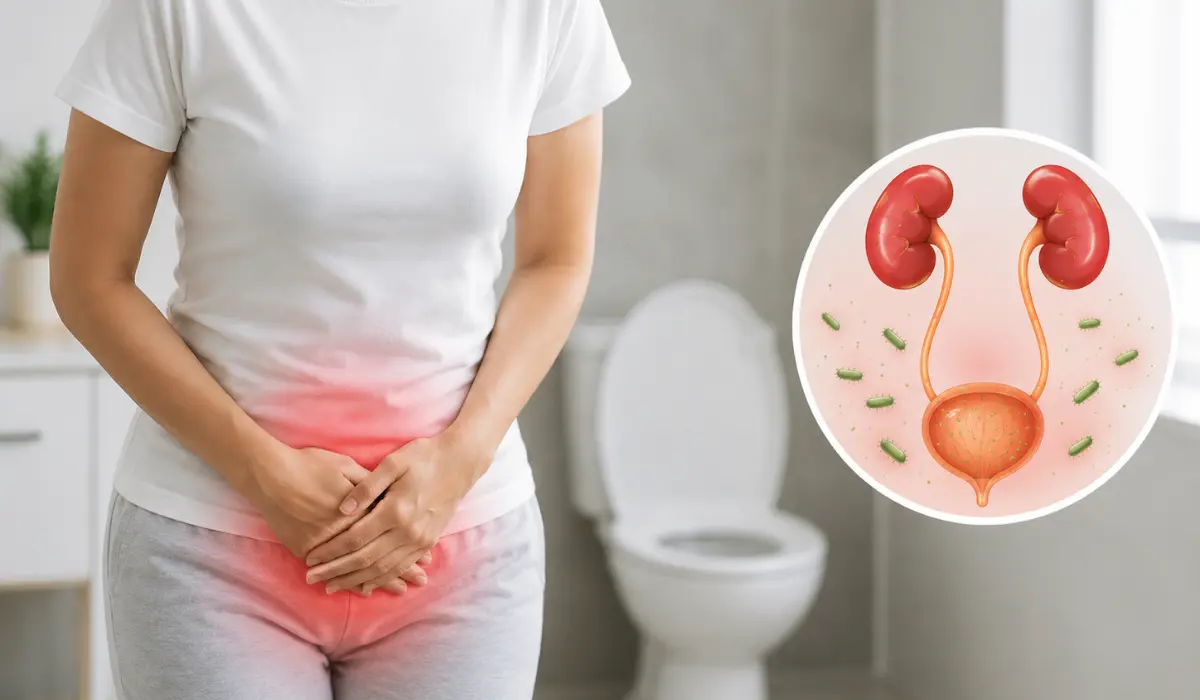
UTI symptoms in women commonly include burning during urination, a frequent need to pee, sudden urgency, and pressure in the lower abdomen. Urine may also appear cloudy, smell stronger than usual, or contain blood. Fever, chills, vomiting, or pain in the back or side may mean the infection has reached the kidneys and needs prompt care.
What Is a Urinary Tract Infection?
A urinary tract infection develops when germs enter part of the urinary system. The urinary tract includes the urethra, bladder, ureters, and kidneys.
Most infections affect the bladder and are also called cystitis. A kidney infection is less common but more serious because it can cause significant illness and, in rare cases, sepsis.
Women develop UTIs more often because the urethra is shorter and located closer to the rectum. This gives bacteria a shorter path into the bladder.
What Are the Most Common Signs?
Burning or Pain When Urinating
A burning or stinging feeling while passing urine is one of the most recognizable signs of a bladder infection. The discomfort may become stronger near the end of urination.
Burning can also occur with vaginal irritation or a sexually transmitted infection. Symptoms should be assessed when there is unusual discharge, itching, sores, or bleeding between periods.
Frequent and Urgent Urination
A UTI can make someone feel the need to urinate repeatedly, even when the bladder is nearly empty. Only a small amount of urine may come out each time.
Urgency means the need to pee appears suddenly and feels difficult to delay. Some women also wake more often during the night to use the bathroom.
Lower Abdominal Discomfort
Pressure, cramping, or tenderness may develop in the lower abdomen or pelvic area. The discomfort often feels centered over the bladder rather than on one side.
Pelvic pain can have many causes. Persistent or severe symptoms may require an examination to rule out gynecologic problems, stones, or other bladder conditions.
Changes in Urine
Urine may look cloudy, pink, red, or brown. It can also develop a stronger smell than usual.
Dark or strong-smelling urine alone may be caused by dehydration. However, these changes are more concerning when they occur with burning, urgency, pelvic pressure, or blood in the urine.
What Are the Signs of a Kidney Infection?
A bladder infection can sometimes move upward into one or both kidneys. Warning signs include fever, chills, nausea, vomiting, and pain in the back, side, or groin.
Kidney pain often develops below the ribs and may affect one side. Rapid breathing, confusion, severe weakness, or shortness of breath may signal sepsis and require emergency attention.
Can a UTI Occur Without Typical Symptoms?
Some women may have mild or less obvious symptoms. Older adults may develop new confusion, agitation, weakness, or worsening incontinence, although these changes can have many other causes.
Bacteria can also appear in urine without causing symptoms. This is called asymptomatic bacteriuria. It is especially important during pregnancy because untreated bacteria may progress to a more serious infection.
What Can Feel Like a UTI?
Yeast infections, vaginal irritation, sexually transmitted infections, kidney stones, and painful bladder syndrome can produce similar symptoms.
Vaginal itching and thick discharge are not typical bladder infection signs. Unusual discharge, sores, bleeding after sex, or pelvic pain may point to another condition that requires different testing and treatment.
How Is a UTI Diagnosed?
A healthcare professional may diagnose a UTI by reviewing symptoms, performing an examination, and testing a urine sample.
A urinalysis checks for blood and white blood cells. A urine culture can identify bacteria and help determine which antibiotic may work. Repeated infections may require imaging or additional bladder tests.
How Are UTIs Treated?
Bacterial bladder infections are commonly treated with antibiotics. The exact medicine and treatment length depend on the infection, health history, allergies, pregnancy status, and local resistance patterns.
Take antibiotics exactly as prescribed and complete the full course, even when symptoms improve early. Leftover antibiotics should not be saved or shared because the wrong medicine can delay proper treatment and contribute to resistance.
Drinking enough water can support hydration and may ease recovery. A heating pad placed over the lower abdomen may also reduce discomfort. People with heart or kidney conditions should ask how much fluid is appropriate.
Practical Tips to Reduce UTI Risk
Drink water regularly and avoid holding urine for long periods. Take enough time to empty the bladder fully whenever possible.
Wipe from front to back after using the toilet. Urinating after sexual activity may help remove bacteria near the urethra. Avoid douches and strongly scented products around the genital area because they may cause irritation.
Women who experience repeated infections should discuss spermicides, diaphragms, menopause-related changes, vaginal estrogen, or other prevention options with a healthcare professional.
When Should You Seek Professional Help?
Contact a healthcare professional when symptoms are new, painful, persistent, or getting worse. Medical advice is particularly important during pregnancy, after menopause, with diabetes, or when infections keep returning.
Seek urgent care for fever, chills, vomiting, blood in the urine, back or side pain, severe weakness, or symptoms that do not improve after starting treatment. These signs may indicate a kidney infection or another condition requiring prompt care.
Final Thoughts
A bladder infection often causes burning, urgency, frequent urination, pelvic pressure, and changes in urine. Early assessment can confirm the cause and prevent the infection from spreading.
Fever, vomiting, or pain below the ribs should never be dismissed as a minor bladder problem. These symptoms may require urgent medical treatment.
FAQs
Mild symptoms may improve without antibiotics, but it is safer to seek advice because untreated infection can worsen or spread to the kidneys in some women.
Vaginal discharge is not a typical bladder infection symptom. It may suggest a yeast infection, bacterial vaginosis, or STI that needs separate testing and appropriate treatment.
Many women begin feeling better within a few days of starting the correct antibiotic. Finish the prescribed course, even when burning and urgency improve sooner.
Sex does not directly cause every UTI, but activity can move bacteria toward the urethra. Urinating afterward and staying hydrated may help reduce risk for some women.
Repeated UTIs may relate to sexual activity, menopause, spermicides, urinary tract problems, or incomplete bladder emptying. A clinician can review prevention and treatment options with you.
Seek urgent care for fever, chills, vomiting, back or side pain, confusion, severe weakness, or rapidly worsening symptoms because these may indicate kidney infection or sepsis.
Reference
- Centers for Disease Control and Prevention
Urinary Tract Infection Basics - National Health Service
Urinary Tract Infections