PCOS and positive ovulation test results can feel confusing, especially when you are trying to understand your fertile window. A positive result usually means your body has detected a rise in luteinizing hormone, also called LH. In many cycles, this rise happens before ovulation.
With PCOS, the situation can be different. Hormone levels may not follow a predictable pattern. Some women with PCOS may get repeated positive ovulation tests, flashing results, or strong test lines without actually releasing an egg.
This does not mean ovulation tests are useless. It means they should be read carefully and used with other signs of ovulation.
What Does A Positive Ovulation Test Mean?
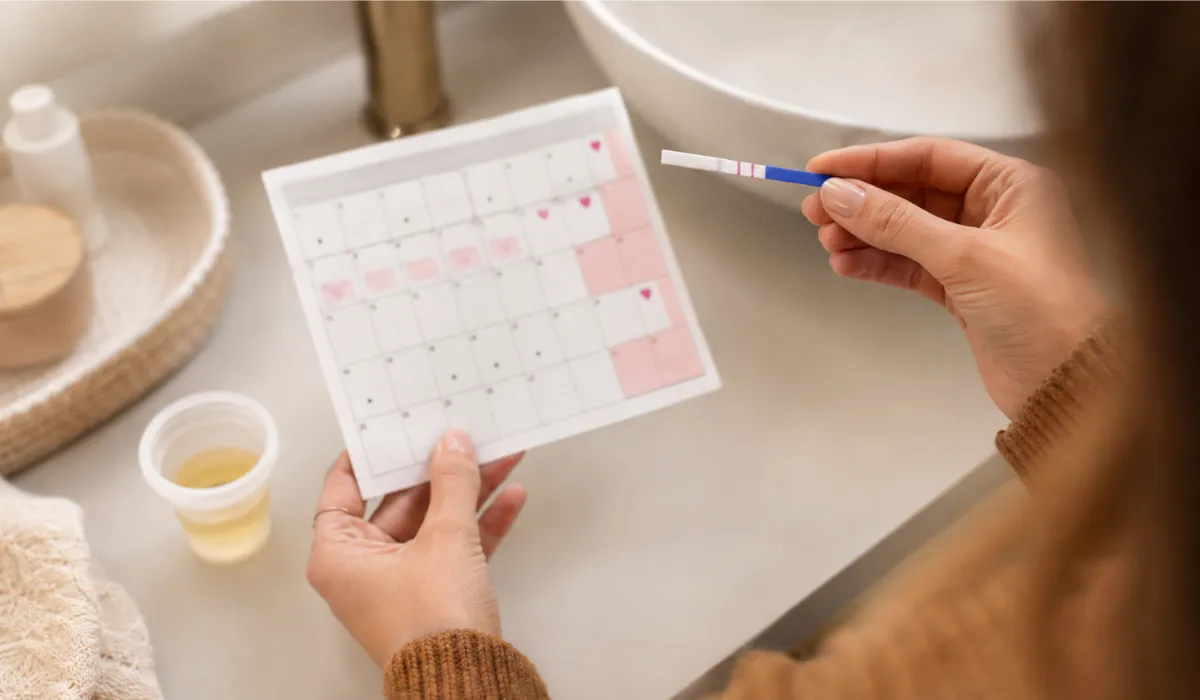
A positive ovulation test means the test has detected enough LH in urine to suggest an LH surge. This surge often happens about 24 to 36 hours before ovulation.
Ovulation is the release of an egg from the ovary. If you are trying to conceive, the days before and around ovulation are usually the most fertile days of the cycle.
For many women with regular cycles, ovulation tests can be helpful. They show when the body may be preparing to ovulate. However, a positive test does not prove that an egg was released. It only shows that LH reached a certain level.
Why PCOS Can Affect Ovulation Tests?
PCOS is a hormone-related condition that can affect periods, ovulation, skin, hair growth, weight, and fertility. One common feature of PCOS is irregular or missed ovulation.
Many people with PCOS have higher or more unstable LH levels. Because ovulation tests are designed to detect LH, they may turn positive even when the body is not close to ovulation.
This can lead to confusing results. You may see a positive test several days in a row. You may also get a positive test early in the cycle, late in the cycle, or more than once in the same cycle.
In some cases, the body may try to ovulate but not complete the process. This can create an LH rise without actual egg release.
Can PCOS Cause A False Positive Ovulation Test?
Yes, PCOS can sometimes cause a false positive ovulation test. This happens when the test looks positive because LH is elevated, but ovulation does not actually happen.
This is not your fault and it does not mean you used the test incorrectly. The test is only measuring hormone activity. It cannot see whether the ovary released an egg.
False positives may be more likely if your cycles are long, irregular, or unpredictable. They may also happen if your LH stays high for several days.
If you often get positive tests but your period does not arrive about two weeks later, it may be a sign that ovulation did not occur.
Repeated Positive Ovulation Tests With PCOS
Repeated positive ovulation tests can happen with PCOS because LH may stay high or rise more than once. This can make it hard to know which result is the true fertile signal.
Some women may test positive for many days in a row. Others may get a positive result, then a negative result, then another positive result later in the same cycle.
When this happens, try not to rely on the test alone. Look at other signs such as cervical mucus, basal body temperature, cycle length, and symptoms. A clear pattern over several months can be more useful than one test strip.
Does A Positive Ovulation Test Mean You Are Fertile?
A positive ovulation test can mean you may be entering your fertile window, but it is not a guarantee of fertility. Fertility depends on ovulation, egg quality, sperm health, fallopian tube health, uterine health, and timing.
With PCOS, the main issue is often irregular ovulation. Some women with PCOS ovulate occasionally. Some ovulate late. Others may not ovulate regularly without support.
If you get a positive ovulation test, having sex that day and the next day may improve timing. However, if positive tests happen often without regular periods, it is worth speaking with a doctor.
How To Track Ovulation More Accurately With PCOS?
Ovulation tests can still be part of your tracking routine, but they work better when combined with other methods.
Basal body temperature can help confirm ovulation after it happens. Your temperature usually rises slightly after ovulation due to progesterone. This method does not predict ovulation in advance, but it can show whether ovulation likely occurred.
Cervical mucus is another useful sign. Fertile mucus often looks clear, stretchy, and slippery, similar to egg white. This type of mucus can appear before ovulation.
Period tracking also matters. If your period usually comes 12 to 16 days after a positive ovulation test, that may suggest ovulation happened. If your period is very delayed, the positive test may not have reflected true ovulation.
Some doctors may also use blood tests, ultrasound monitoring, or progesterone testing to confirm ovulation.
Best Time To Use Ovulation Tests With PCOS
If your cycles are irregular, it can be hard to know when to start testing. Starting too early may lead to many test strips and more confusion. Starting too late may miss the fertile window.
One option is to begin testing a few days after your period ends and continue until you see a clear change. If your cycles are very long, you may need a more personalized plan.
Testing at the same time each day can help. Many people test in the afternoon or early evening because LH may be easier to detect later in the day. Try not to drink too much fluid before testing, as diluted urine can affect results.
If you use digital ovulation tests, read the instructions carefully. Some tests track estrogen and LH, while basic strips mainly track LH.
When To Take A Pregnancy Test?
An ovulation test is not the same as a pregnancy test. If you had sex around a positive ovulation test, wait until your expected period before taking a pregnancy test.
If your periods are irregular, testing about 14 days after suspected ovulation may be reasonable. If the test is negative but your period still does not come, test again after a few days.
Some people notice that ovulation tests become positive before a pregnancy test, but this is not a reliable way to confirm pregnancy. A home pregnancy test is the correct test to use.
When To See A Doctor?
You should speak with a healthcare provider if you have very irregular periods, no periods for several months, repeated positive ovulation tests without a period, or trouble getting pregnant.
A doctor may check hormone levels, thyroid function, prolactin, blood sugar, and other possible causes of irregular ovulation. They may also discuss lifestyle support, cycle regulation, or fertility treatment if needed.
If you are under 35 and have been trying for 12 months, medical advice is usually recommended. If you are 35 or older, it is often recommended after 6 months. You may want help sooner if your cycles are very irregular or you already know you have PCOS.
Final Verdict
PCOS and positive ovulation test results can be confusing because a positive test does not always mean ovulation happened. In PCOS, LH levels may rise often or stay high, causing positive results even when the body does not release an egg.
The best approach is to use ovulation tests with other signs, such as cervical mucus, basal body temperature, cycle tracking, and medical testing when needed. If you are trying to conceive, a doctor can help confirm whether you are ovulating and guide you toward the right next step.
FAQ
1. Can PCOS make ovulation tests positive all the time?
Yes. Some women with PCOS may have higher LH levels, which can make ovulation tests appear positive often, even without true ovulation.
2. Can I get pregnant after a positive ovulation test with PCOS?
Yes, pregnancy is possible if ovulation happens and timing is right. However, PCOS can make ovulation less predictable, so tracking may need extra support.
3. How do I know if I really ovulated with PCOS?
A temperature rise, regular period after the LH surge, progesterone blood test, or ultrasound monitoring can help confirm whether ovulation likely happened.
4. Are digital ovulation tests better for PCOS?
Digital tests may be easier to read, but they can still be confused by irregular LH patterns. They are helpful but not always perfect for PCOS.
5. Should I keep testing after a positive ovulation test?
If you have PCOS and results are confusing, you may continue testing for patterns. However, repeated positives should be discussed with a healthcare provider.
References
ACOG
Polycystic Ovary Syndrome (PCOS)
https://www.acog.org/womens-health/faqs/polycystic-ovary-syndrome-pcos
Mayo Clinic
Polycystic Ovary Syndrome (PCOS)
https://www.mayoclinic.org/diseases-conditions/pcos/symptoms-causes/syc-20353439
Cleveland Clinic
Polycystic Ovary Syndrome (PCOS)
https://my.clevelandclinic.org/health/diseases/8316-polycystic-ovary-syndrome-pcos
Recent Post