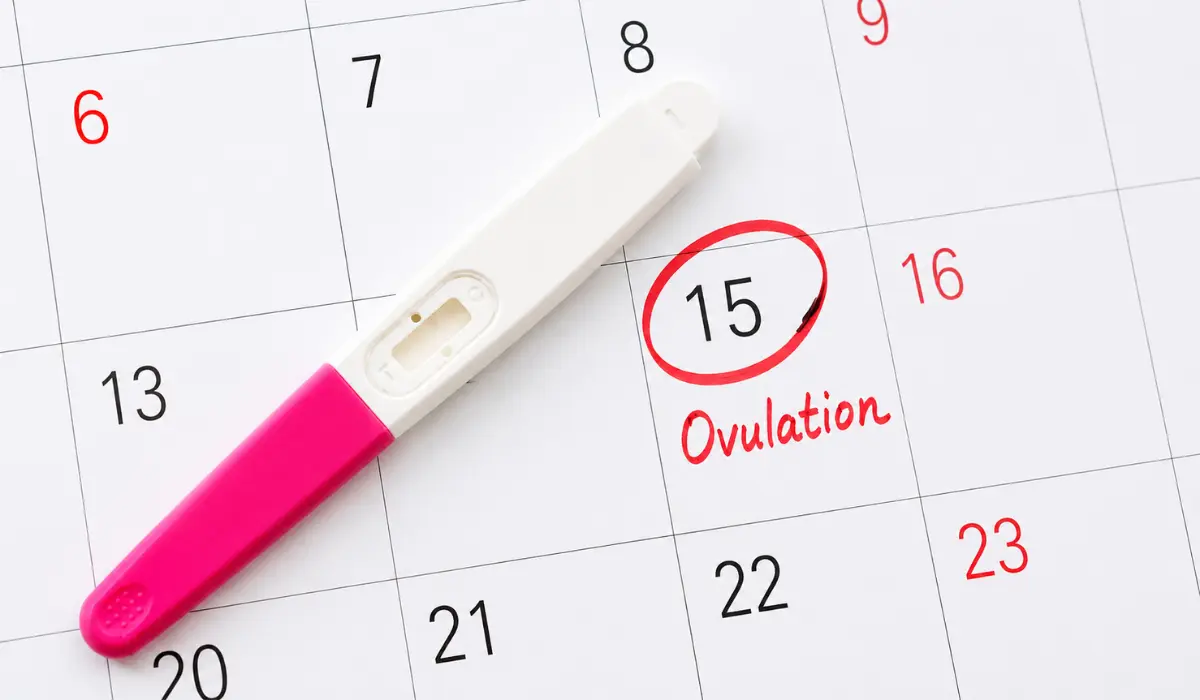
Tracking ovulation with PCOS can be harder because cycles may be irregular or ovulation may happen late. Using period dates, cervical mucus, BBT, ovulation tests, and progesterone testing can give a clearer picture.
Calendar apps alone are usually not enough for PCOS because they often guess based on average cycle length.
Why PCOS Makes Ovulation Hard to Predict?
PCOS can affect hormones that control the menstrual cycle. This may lead to irregular periods, missed periods, high androgen levels, and cycles where ovulation does not happen regularly. Irregular menstrual periods are one of the common features of PCOS.
In a typical cycle, ovulation may happen around the middle of the cycle. With PCOS, that timing can shift a lot. One cycle may be 32 days, another may be 48 days, and another may skip ovulation completely.
This does not mean pregnancy is impossible. It means tracking needs more patience and more than one method.
Best Ways to Track Ovulation With PCOS
1. Track Your Period Dates First
Start by recording the first day of each period. Also note how many days bleeding lasts, how heavy it is, and whether you have spotting between periods.
After three months, look for patterns. Are your cycles usually long? Do they change each month? Do you go more than 60–90 days without bleeding?
This basic information helps you understand whether your cycle is predictable or irregular. It also gives your doctor useful details if you need fertility support.
2. Watch Cervical Mucus Changes
Cervical mucus can give helpful clues before ovulation. As estrogen rises, mucus may become clear, slippery, stretchy, and wet. Many people describe it as egg-white discharge.
This type of mucus may mean your body is preparing to ovulate. However, PCOS can sometimes cause more than one patch of fertile-looking mucus in the same cycle.
So, mucus is useful, but it should not be your only sign.
3. Use Basal Body Temperature
Basal body temperature, or BBT, is your resting temperature before you get out of bed. After ovulation, progesterone rises and your temperature usually stays slightly higher.
To track BBT:
- Take your temperature every morning before moving.
- Use the same thermometer.
- Test at the same time each day.
- Record the result in an app or chart.
BBT does not predict ovulation before it happens. It helps confirm that ovulation may already have occurred.
4. Use Ovulation Predictor Kits Carefully
Ovulation predictor kits check for LH, a hormone that usually rises before ovulation. These tests can help some people with PCOS, but they can also be confusing.
Some people with PCOS have higher LH levels or several LH surges. This may cause repeated positive tests without actual ovulation.
For better results, use OPKs along with cervical mucus and BBT. A positive ovulation test followed by a clear temperature rise is more useful than a positive test alone.
5. Ask About Progesterone Testing
A progesterone blood test can help confirm whether ovulation happened. In regular cycles, this test is often done about 7 days after ovulation.
With PCOS, testing on “cycle day 21” may not work if you ovulate late. For example, if you ovulate on day 35, a day-21 progesterone test may look low even if ovulation happens later.
Ask your provider when to test based on your cycle pattern.
Simple Tracking Example
Here is how a PCOS tracking pattern may look:
You notice slippery cervical mucus around cycle day 24. Your ovulation test turns positive on day 25. Your BBT rises and stays higher from day 27 onward.
This pattern may suggest ovulation happened around day 26. But if your test is positive and your temperature never rises, ovulation may not have happened.
What If You Do Not Ovulate?
Some people with PCOS have anovulatory cycles, which means no ovulation happens. Signs may include very irregular periods, long cycles, or bleeding that comes after many weeks without a clear ovulation pattern.
If you are trying to conceive, a doctor may discuss lifestyle support, blood tests, ultrasound, thyroid testing, insulin resistance care, or ovulation-inducing medicine. Current PCOS guidance lists letrozole as a first-line medicine for ovulation induction in infertile anovulatory women with PCOS when no other infertility factors are present.
Do not start fertility medicines without medical supervision.
Practical Tips to Improve Tracking Accuracy
Use the same tracking method for at least three cycles before judging patterns. PCOS tracking can look messy at first.
Keep notes on:
- Period start date
- Cervical mucus
- BBT
- OPK results
- Spotting
- Pelvic pain
- Sleep changes
- Stress
- Medication or supplement use
Avoid relying only on an app’s predicted fertile window. Apps can be helpful for recording data, but PCOS cycles often need real body signs.
If trying for pregnancy, having sex every 2–3 days during the cycle may reduce pressure around exact timing.
Positive Ovulation Test With PCOS
A positive ovulation test with PCOS can be helpful, but it does not always confirm that ovulation will happen. Some people with PCOS may have higher LH levels or more than one LH surge in a cycle.
This can lead to repeated positive tests, even when ovulation does not occur. For better accuracy, compare the test result with other signs like slippery cervical mucus and a sustained BBT rise. If positive tests keep happening without a clear temperature shift, ask a healthcare provider about progesterone testing.
When to See a Doctor?
Speak with a healthcare provider if your periods are very irregular, you go more than 90 days without a period, or you are trying to conceive without success.
Pregnancy with PCOS is possible, but irregular ovulation can make it harder to predict the best time to try. Ovulation tracking, cycle awareness, and medical guidance can help improve fertility planning.
You should also get medical advice if you have heavy bleeding, severe pelvic pain, sudden weight changes, excess facial hair, acne, hair thinning, or symptoms of high blood sugar.
If you are under 35 and have been trying for 12 months, ask for fertility guidance. If you are 35 or older, ask after 6 months. Earlier help may be needed with very irregular cycles.
Final Thoughts
Tracking ovulation with PCOS is possible, but it usually takes more than a calendar app. The best approach is to combine cycle dates, cervical mucus, basal body temperature, ovulation tests, and medical testing when needed.
PCOS can make ovulation late or unpredictable, so do not feel discouraged if your chart is not perfect. A clear tracking routine can help you understand your body, plan your fertile window, and know when to ask for professional support.
FAQs
Yes, many people with PCOS ovulate naturally, but ovulation may be late or irregular. Some cycles may not include ovulation at all.
The best method is combining cervical mucus, basal body temperature, cycle tracking, ovulation tests, and progesterone testing if recommended by your doctor.
Ovulation tests can help, but they may show confusing results if LH stays high or surges more than once during the cycle.
BBT may help confirm ovulation after it happens. A sustained temperature rise after fertile signs can suggest progesterone increased after ovulation.
Many apps predict ovulation using average cycle length. PCOS cycles can be irregular, so app predictions may not match your actual ovulation day.
Get help if cycles are very irregular, you skip periods, or you have been trying to conceive for 6–12 months depending on age.
Reference
- Mayo Clinic – Ovulation Signs
https://www.mayoclinic.org/healthy-lifestyle/getting-pregnant/expert-answers/ovulation-signs/faq-20058000 - Cleveland Clinic – Ovulation
https://my.clevelandclinic.org/health/articles/23439-ovulation